Carouge feels like a different country from Geneva, and for a while it was. In the eighteenth century this side of the Arve belonged to the Kingdom of Sardinia, ruled by the House of Savoy from Turin. The kings decided to build a new town here, close enough to compete with Protestant Geneva for trade and people. Architects drew a regular grid of streets, low houses and squares, and the result still stands, painted in soft colours and shaded by plane trees.
This short, flat walk crosses the Arve, follows the old main street to the town's squares, visits the Catholic and the Protestant churches and wanders into the courtyards behind the street fronts. It takes about an hour and a quarter. Market mornings bring the Place du Marché to life; market days and times change, so check before planning around them.
To reach the start, take a tram from the centre towards Carouge and get off before the river, or walk south from the Plaine de Plainpalais to the Arve, about ten minutes. Carouge is a separate municipality from the City of Geneva, though it lies within the canton.
Pont de Carouge
Look down at the grey, fast-moving Arve, so different from the clear Rhône.
The Arve comes down from the glaciers of the Mont Blanc massif, and its water is milky grey with fine rock silt. For a long time this river marked the edge of Geneva. Across the bridge lay Savoyard and then Sardinian territory, and Carouge grew up as a bridgehead town at the crossing.
In 1754 a treaty between Geneva and the Kingdom of Sardinia settled the border here. Two decades later King Victor Amadeus III launched a plan to turn the village of Carouge into a proper town, and in 1786 it received the status of a city. The planners were from Turin, and you will see their ideas in every straight street ahead.
Notice how quickly the scale drops once you cross: the tall blocks of Geneva give way to houses of two or three storeys.
Walk on · Cross the bridge and continue straight ahead into Rue Ancienne, 3 minutes.
Rue Ancienne
Look at the even line of low house fronts, each with tall shuttered windows.
As its name suggests, this is one of the oldest streets in Carouge, following the road that ran south from the bridge long before the planned town was drawn. Along it you start to see the Carouge style: houses of two or three storeys, plastered and painted in ochre, cream, pale green or pink, with grey shutters and big street doors.
The planners wanted a town that looked unified, so buildings shared heights and proportions. This made Carouge feel quite different from the crowded medieval lanes of Geneva across the river, and the difference was deliberate.
Look for the wide carriage doors set into many façades. They lead to inner courtyards, once used for workshops, stables and storage. Some are private; where a door stands open and no sign forbids entry, a quiet look from the threshold is the most you need.
Walk on · Continue south and turn right to the small square with the town's museum, 3 minutes.
Place de Sardaigne
Look at the name plate on the square, which recalls the old kingdom.
Place de Sardaigne takes its name from the Kingdom of Sardinia, which governed Carouge until the French Revolution. In 1792 French troops took Savoy, and Carouge became part of France. After Napoleon's fall, the Treaty of Turin of 1816 handed the town to the canton of Geneva, which had just joined Switzerland.
The town's museum is on this square; its collections focus on Carouge's history and on ceramics, a craft long practised here. Its opening times change, so check before going in.
Notice how open the square feels compared with the street you came along. The planners spaced small squares through the grid so that every part of town had light, air and a place to meet. That pattern, a grid with breathing spaces, is the core of the town's design.
Walk on · East one block to the large tree-lined square with the fountain, 2 minutes.
Place du Marché
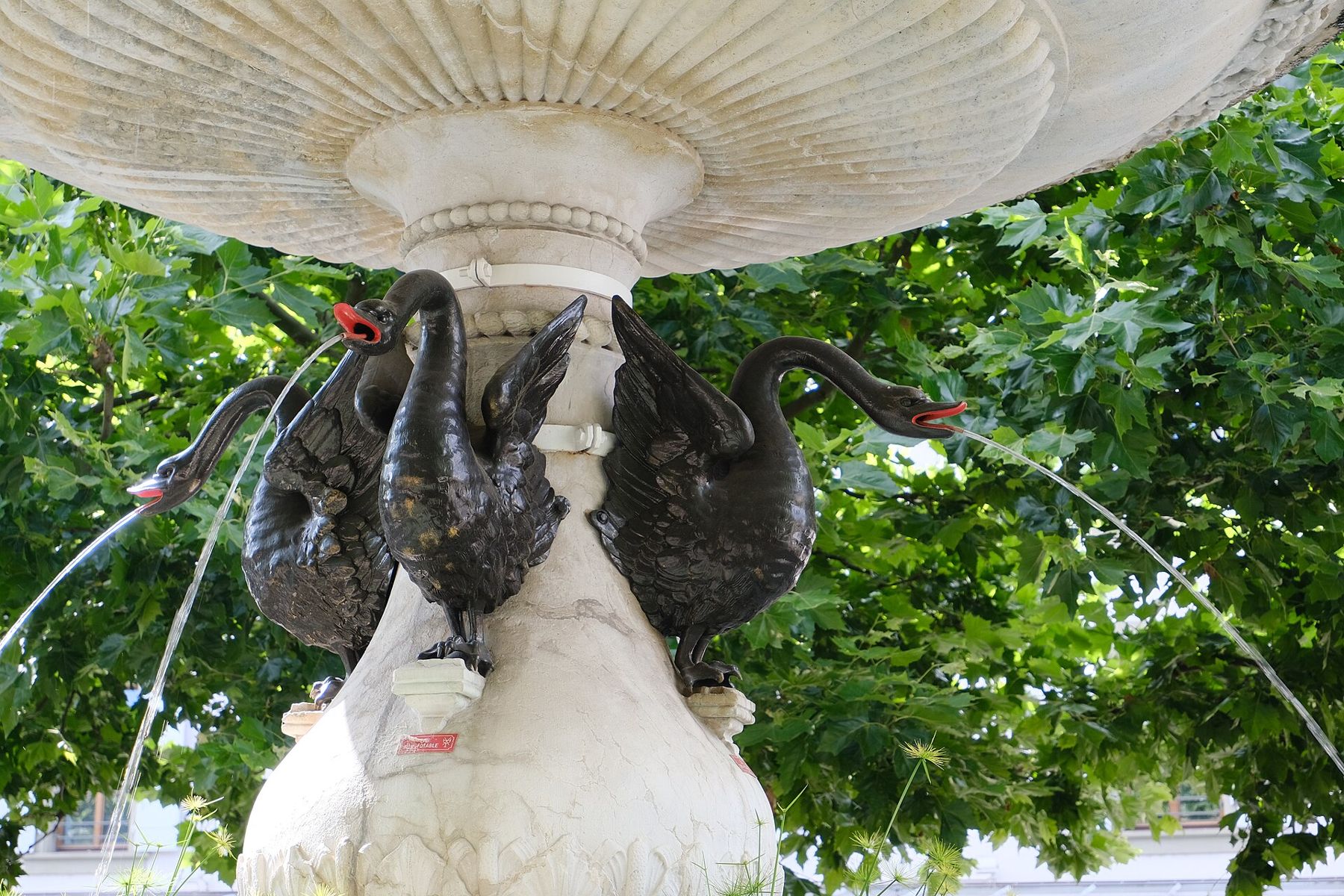
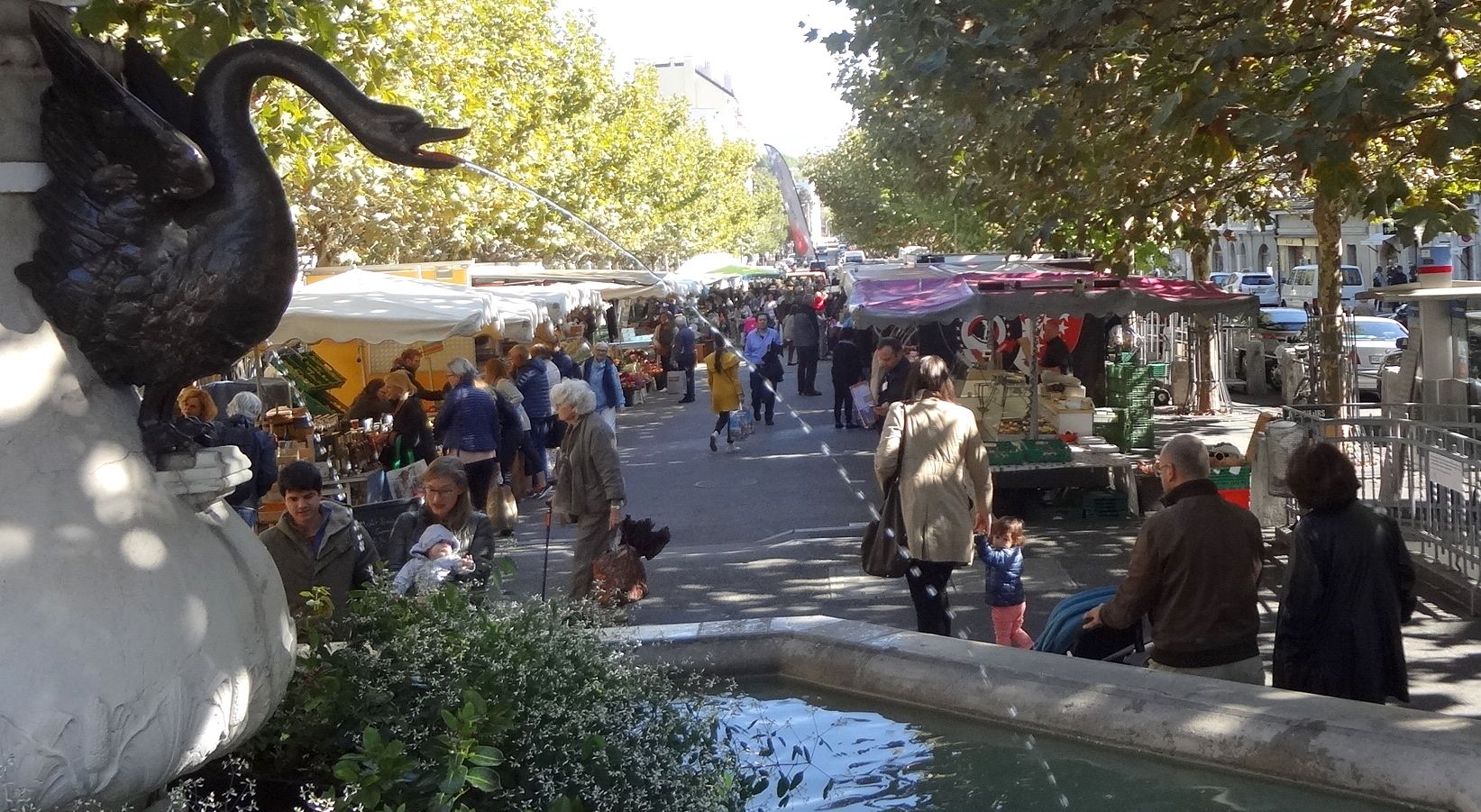
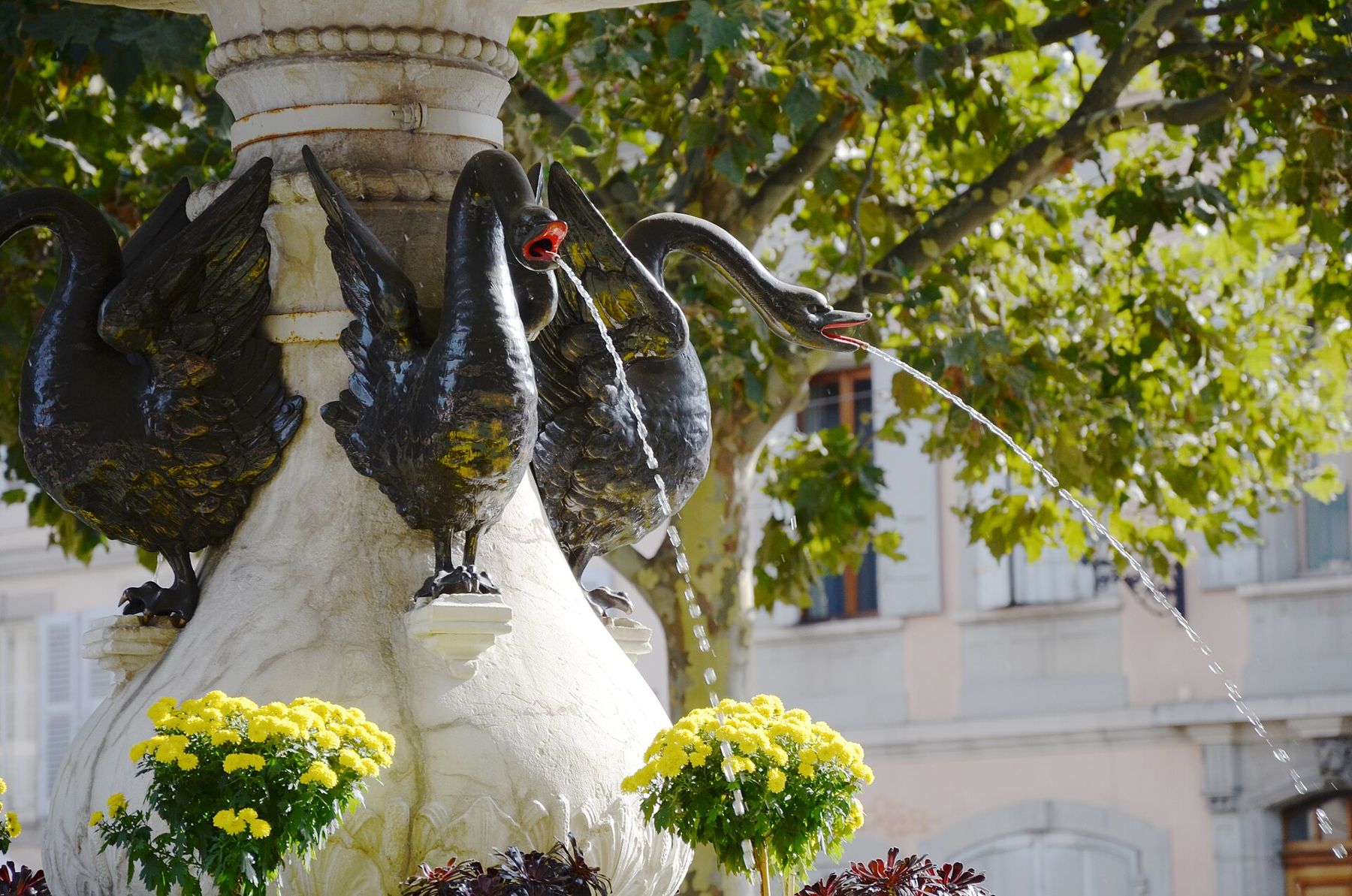
Look at the fountain's bronze swans, spouting water into the basin below.
This is the heart of Carouge, a broad square under plane trees, with the market fountain in the middle. On market mornings stalls of fruit, vegetables, cheese and flowers fill the space under the trees; on other days the square is calm, with people reading on the benches.
The fountain dates from the nineteenth century. Its basin sits on a column ringed by dark bronze swans, their necks curving outwards, each spouting a thin jet of water. Look closely at the details of the feathers and the beaks.
Notice that the houses around the square are no higher than the trees. That human scale is what visitors from Geneva came for in the nineteenth century, when Carouge was known as a place for workshops, inns and an easier, more southern way of life.
 Change here for the Geneva linePlainpalais and the museums
Walk on · To the church on the edge of the square, under a minute.
Église Sainte-Croix
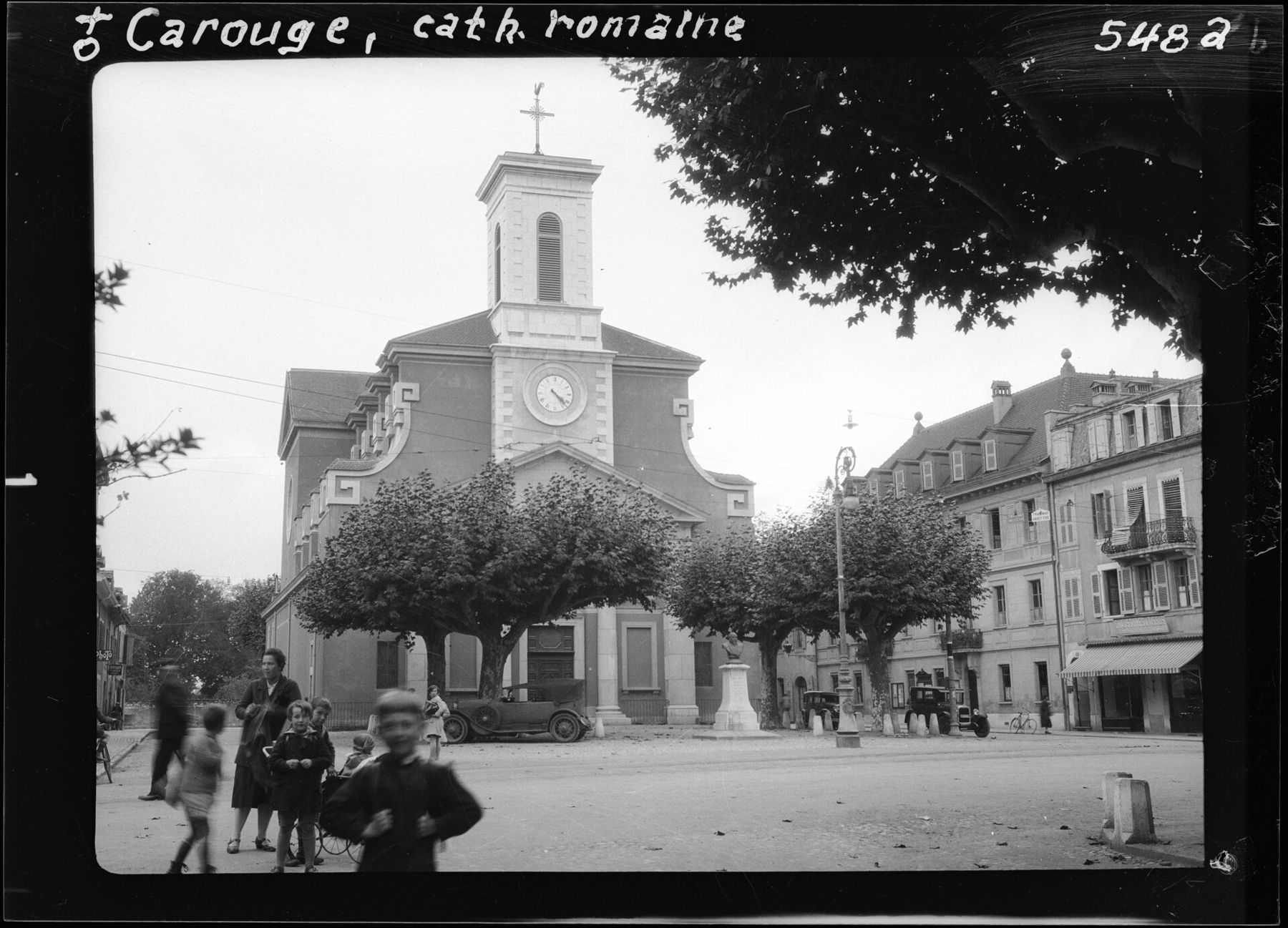
Look up at the clock tower above the church's plain, pale front.
Sainte-Croix is the Catholic parish church of Carouge, founded when the town was built and rebuilt and enlarged since. Its presence is part of the town's story: Geneva had been a Protestant city since the 1530s, and Catholic worship had been absent there for generations. Carouge, under a Catholic king, offered Catholics a church on Geneva's doorstep.
Yet the planners of Carouge also wanted settlers and money, so the new town allowed Protestants and Jewish families to live and work here too, which was unusual in the region at the time. That mix of faiths is one reason the town grew so fast in its first decades.
If the doors are open, step in quietly. Services take priority over visits.
Walk on · South-east along Rue Saint-Joseph, looking into any open carriage doors, 4 minutes.
Rue Saint-Joseph
Look through an open carriage door into a courtyard with greenery and workshops.
Rue Saint-Joseph shows the other side of the Carouge plan: behind the neat street fronts lie courtyards and back gardens, many of them still used by artisans. Potters, jewellers, framers and other craftspeople have long worked in these small spaces.
The pattern is close to the one used in towns of Piedmont, the region around Turin: a solid line of houses on the street, with life turned inward to the courtyard behind. Balconies on the courtyard side, outside stairs and wooden galleries were common.
Notice the paving and the drainage channels at your feet, and the iron rings and brackets left on some walls from the days of horses and carts. Respect private courtyards: many are homes, and only those clearly open to visitors should be entered.
Walk on · Continue south to the square with the columned church, 3 minutes.
Place du Temple
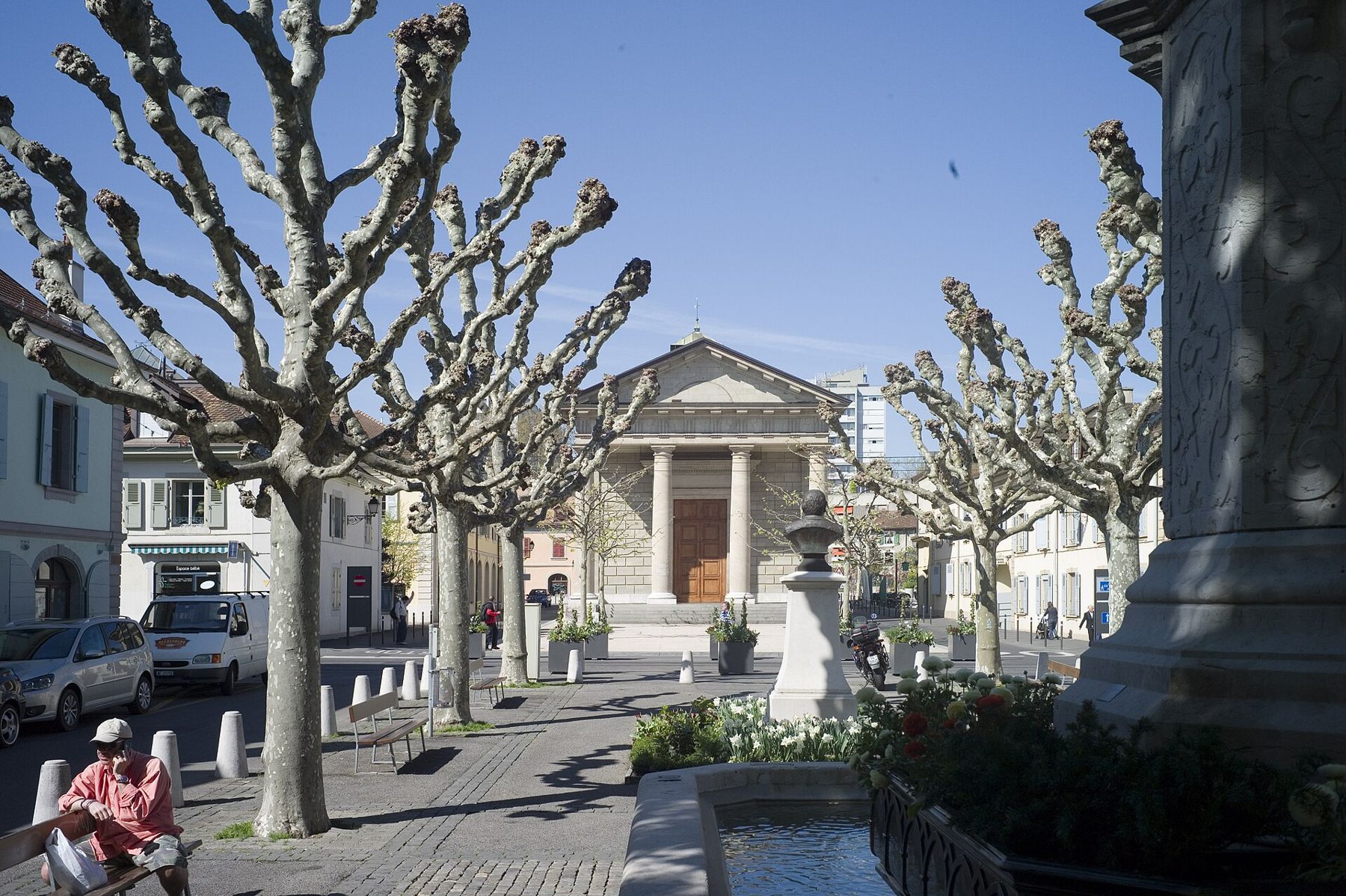
Look at the classical columns of the Protestant temple at the end of the square.
The Protestant church of Carouge, the temple, was built in the early nineteenth century, after the town had joined Geneva. Its front of columns and triangular pediment is in the neoclassical style that Geneva's Protestant churches often used, and it faces down a square lined with plane trees.
The trees here are pruned hard each winter, which gives them knotted, club-like branch ends; in summer they leaf out into a roof of green. The square makes a pair with the Place du Marché: one centred on a Catholic church, one on a Protestant one, a few streets apart in a town designed to welcome both.
Notice the stone basin of the square's fountain, and take a seat on one of the benches before heading back.
Finishing in Place du Temple
The walk ends in the south of the old town. Trams back to central Geneva stop near the Place du Marché, three minutes north. There are public toilets in the town centre, and the fountains around the squares carry drinking water unless a sign says not. The whole walk is flat and on paved streets, easy with a pushchair, though some pavements are narrow.
Shade and pace
The plane trees give good shade in summer, but the street sections between squares can be hot in the afternoon. Carouge is quiet and safe; the main risk is the trams, which run silently through some streets, so look both ways when crossing. On Sundays and public holidays many workshops are closed, which makes for an emptier, calmer walk.
What to walk next
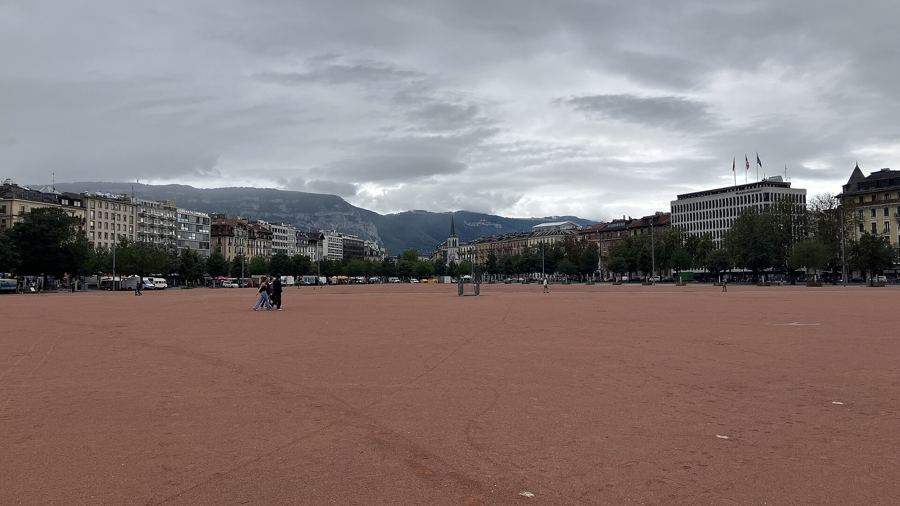
Walk back north over the Arve and you reach the flat open space of the Plaine de Plainpalais, the start of the walk through Plainpalais and its museums. From there it is a short climb to the old town of Geneva that Carouge was built to rival.