Until the 1850s Geneva was shut inside its fortifications. When the walls came down, the city spread out over the old defensive ground with boulevards, parks and grand public buildings: a theatre, a university, museums. This walk follows that new city round the southern side of the old town, starting on the wide open Plaine de Plainpalais and ending at the gilded domes of the Russian church.
On the way you pass the city's ethnography museum, the Grand Théâtre and the Musée Rath on Place Neuve, the old university in the Parc des Bastions and the Musée d'Art et d'Histoire. The route is about 2.8 kilometres and takes a little under two hours without going inside; a museum visit can easily fill a morning on its own. Opening times and admission rules for each museum change, so check them before you set out.
To reach the start, take a tram or bus to the Plainpalais stop at the Rond-Point de Plainpalais, at the northern tip of the plain. The walk is level apart from a gentle climb at the end towards the art museum.
Plaine de Plainpalais
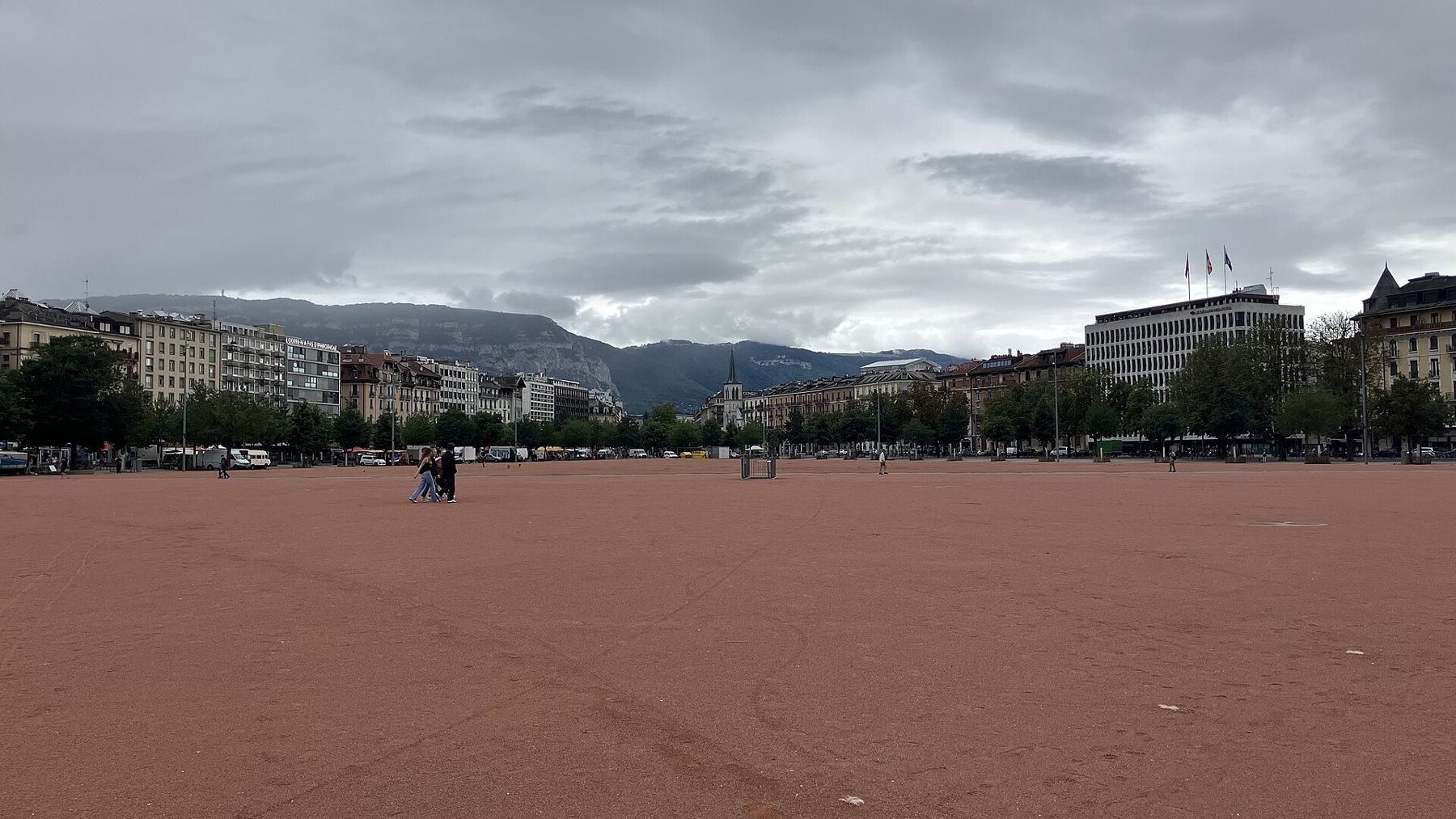
Look across the huge open diamond of red-brown gravel to the mountains beyond.
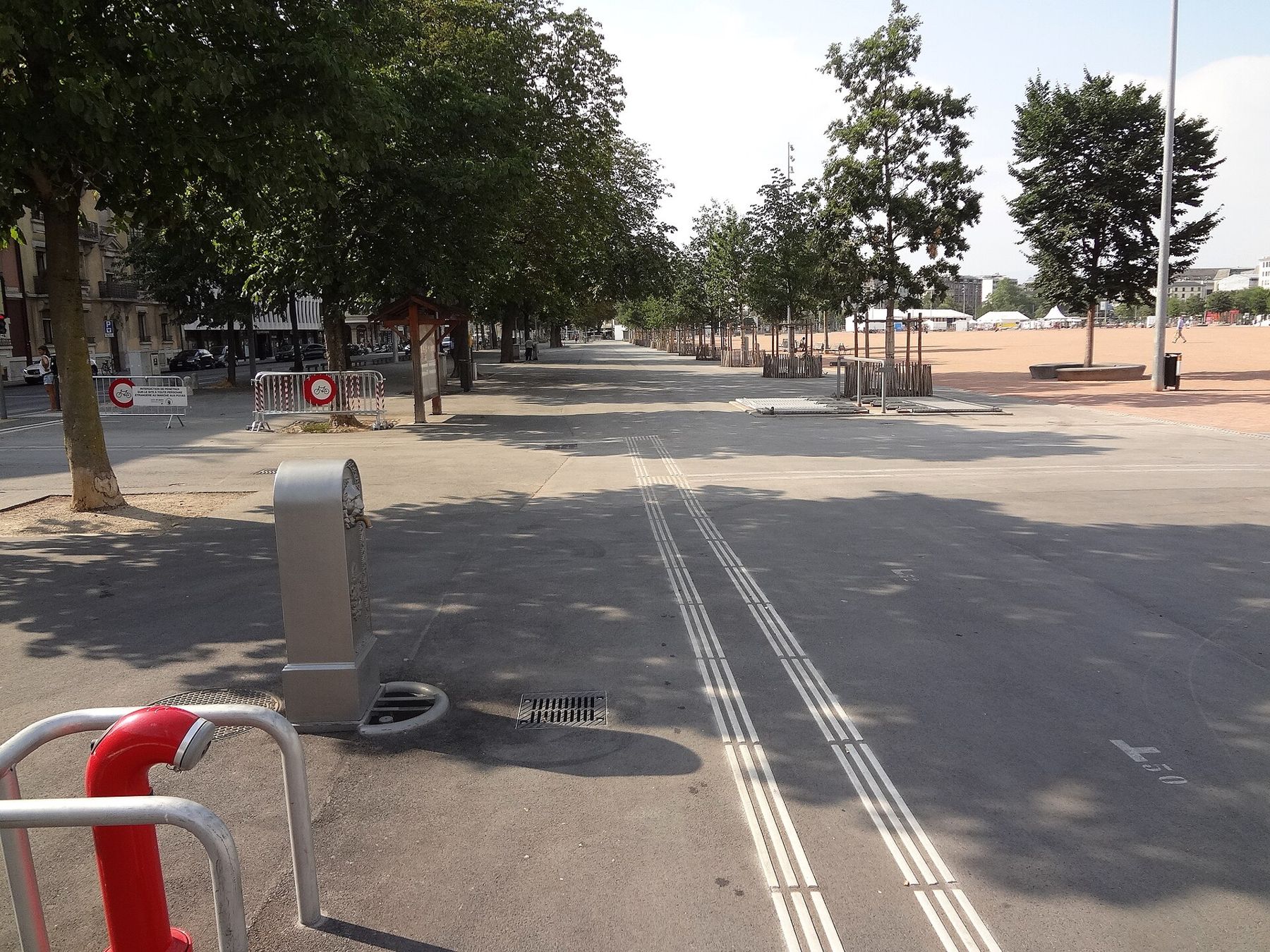
The Plaine de Plainpalais is a vast diamond-shaped open space, lined with trees and surfaced with gravel. For centuries it lay outside the city walls, used for grazing, military drill and fairs. Today it hosts a flea market on certain days, circuses and travelling fairs, and on other days it is simply empty space in the middle of the city, rare in a place where land is precious.
Look for the skatepark at one end and, near the edge, a bronze statue of Frankenstein's creature. Mary Shelley began her novel in 1816 while staying beside the lake near Geneva, and in the book the creature's first victim is killed on Plainpalais. The statue was placed here two centuries later.
Notice the colour of the ground and how the light changes over the open space; from the middle, you get one of the few long views in central Geneva.
Walk on · West off the plain, following signs for the MEG, to its angular building, 7 minutes.
Musée d'ethnographie de Genève
Look up at the sharply pointed roof covered in a pattern of diamond shapes.
The Musée d'ethnographie de Genève, known by its initials MEG, is the city's museum of world cultures. Its collections cover objects from every continent, from masks and textiles to musical instruments. The building you see opened in 2014; its exhibition halls are mostly underground, so above ground there is only a single striking volume under a steep roof.
The diamond pattern on the roof is often compared to woven basketry, a nod to the craft traditions in the collections. The building stands beside an older school building that the museum used for decades before the new one was built.
A few streets away, in a former factory, is Mamco, Geneva's museum of modern and contemporary art, part of a small cluster of art spaces in this neighbourhood. Notice how the district mixes old industrial buildings, schools and housing: this was a working quarter long before it became a museum one.
Walk on · Back east across the plain to its northern tip and up to Place Neuve, 12 minutes.
Grand Théâtre de Genève
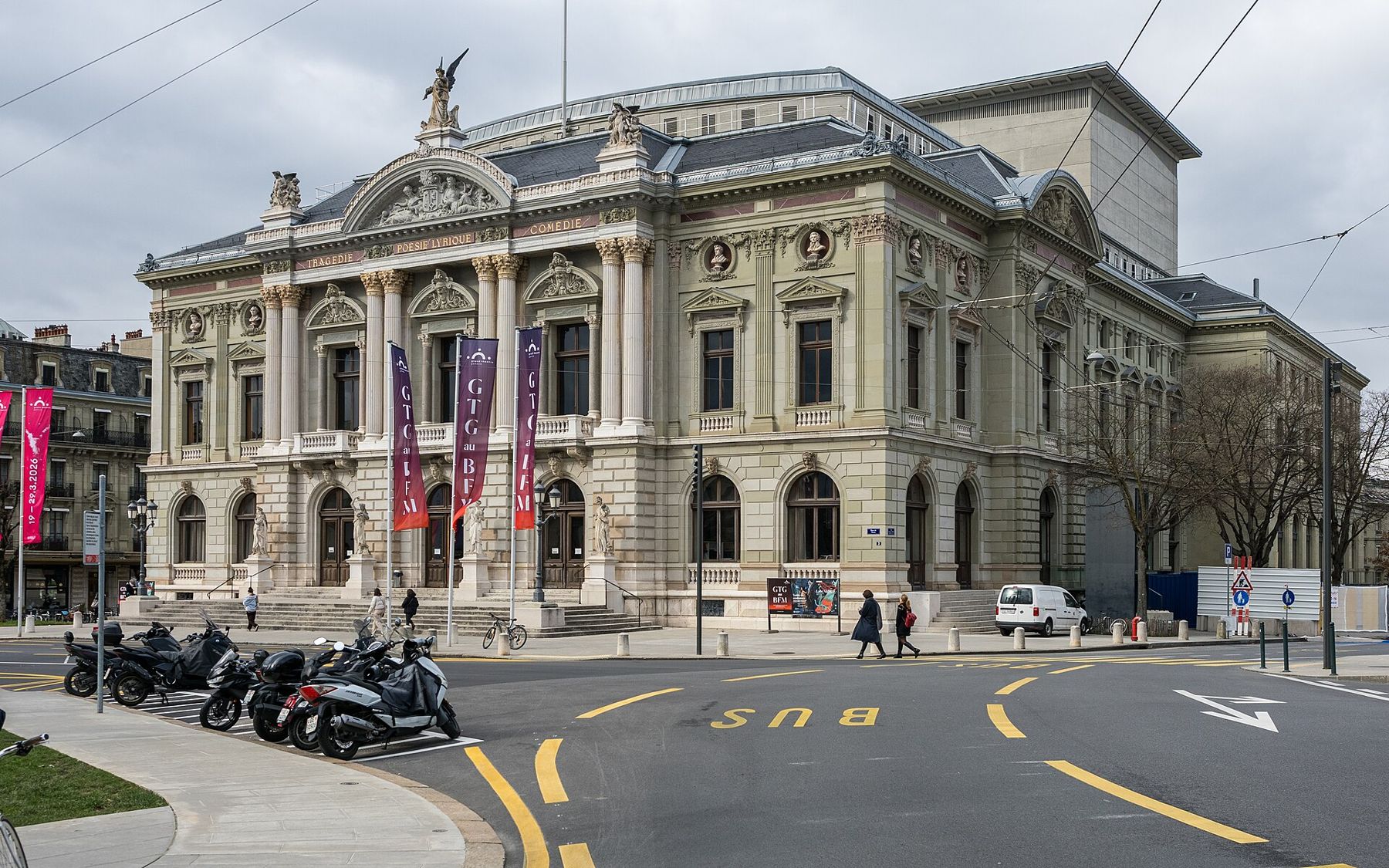
Look up at the statues and winged figures along the opera house's roof line.
The Grand Théâtre is Geneva's opera house, opened in 1879 on Place Neuve, on ground freed when the fortifications were demolished. Its design, with columns, statues and a grand staircase, was influenced by the opera house in Paris, and part of its cost was met from the fortune that the Duke of Brunswick left to the city.
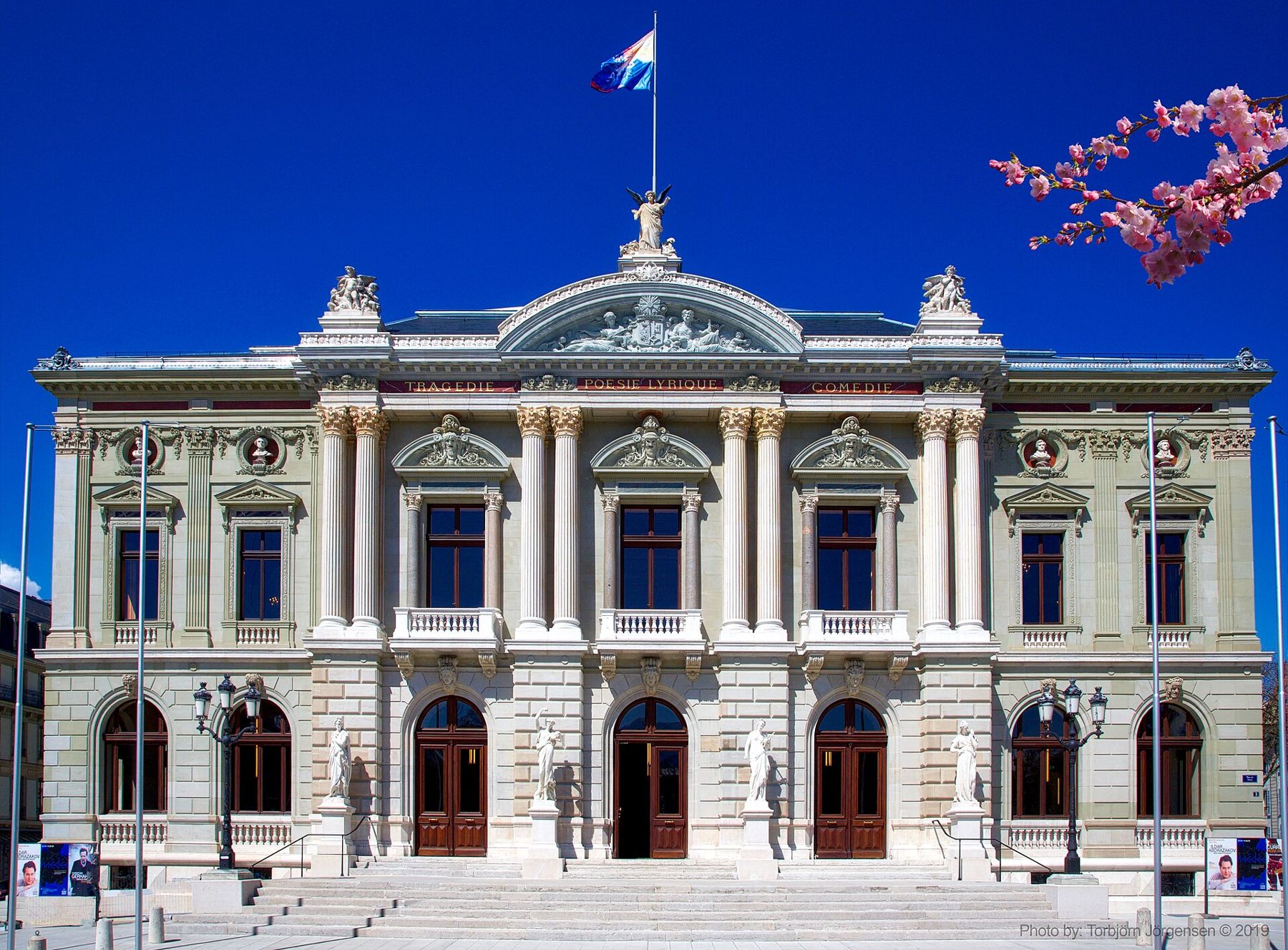
In 1951 a fire broke out during a rehearsal and destroyed the auditorium and stage. The façade survived, and the theatre reopened in 1962 with a modern interior behind the nineteenth-century front. A long restoration was completed in 2019.
Notice the sculpture across the façade and on the roof line. Place Neuve itself was laid out as a showcase of the new city: opera house, music conservatory and art museum together around one square.
Walk on · Across Place Neuve to the columned building facing the park gates, 2 minutes.
Musée Rath
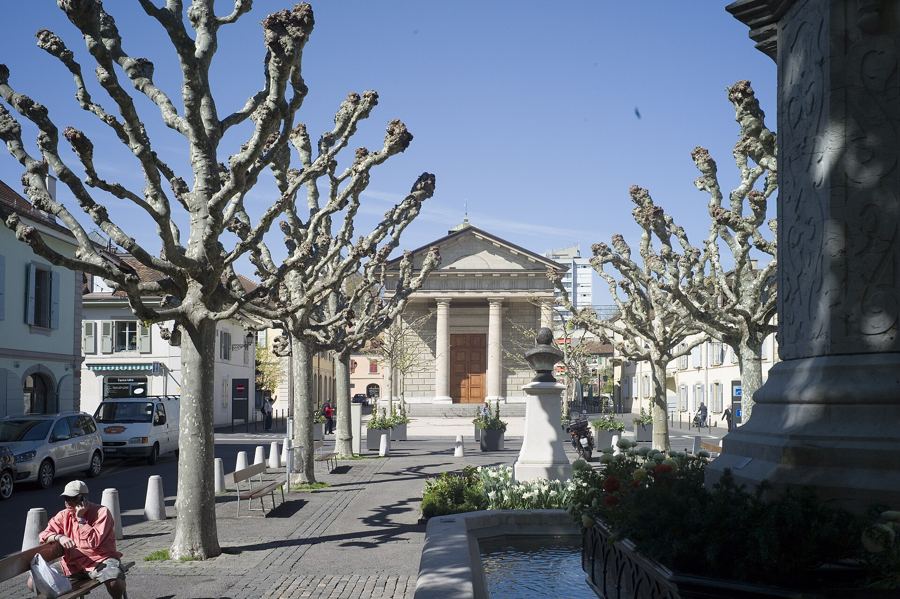
Look at the portico of six columns topped by a triangular pediment.
The Musée Rath, opened in 1826, was one of the first buildings in Switzerland built specifically as an art museum. It was paid for from the fortune of Simon Rath, a Genevan who served as a general in the Russian army, and his sisters gave it to the city. It housed the city's art collections until the Musée d'Art et d'Histoire opened, and today it is used for temporary exhibitions.
Its neoclassical front of columns and pediment was meant to say: this is a temple of the arts. Built before the fortifications came down, it stood right beside the city gate that once opened here, and it marks the first step of Geneva's spread beyond the walls.
Notice the equestrian statue in the middle of Place Neuve. It shows General Guillaume-Henri Dufour, who led the federal army in Switzerland's short civil war of 1847 and later helped found the Red Cross.
 Change here for the Geneva lineCarouge, the Sardinian town across the Arve
Walk on · Through the iron gates into the Parc des Bastions to the long building on the left, 4 minutes.
Uni Bastions
Look along the long pale façade of the old university behind the trees.
The University of Geneva grew out of the Academy that Calvin founded in 1559 to train pastors and teachers. In the nineteenth century the Academy became a full university, and this long building in the Parc des Bastions was built for it in the 1860s and 1870s. It is still in use, known as Uni Bastions, and one wing houses the Bibliothèque de Genève, the city library.
The park itself was the city's first botanical garden before the collections moved north to the international quarter. Across the lawns stands the Reformation Wall, built into the old moat below the ramparts.
Notice the students on the steps and benches, and the giant chessboards laid out on the ground. This is a park that is used, not only admired.
Walk on · East out of the park, along the boulevards below the old town to the museum, 10 minutes.
Musée d'Art et d'Histoire
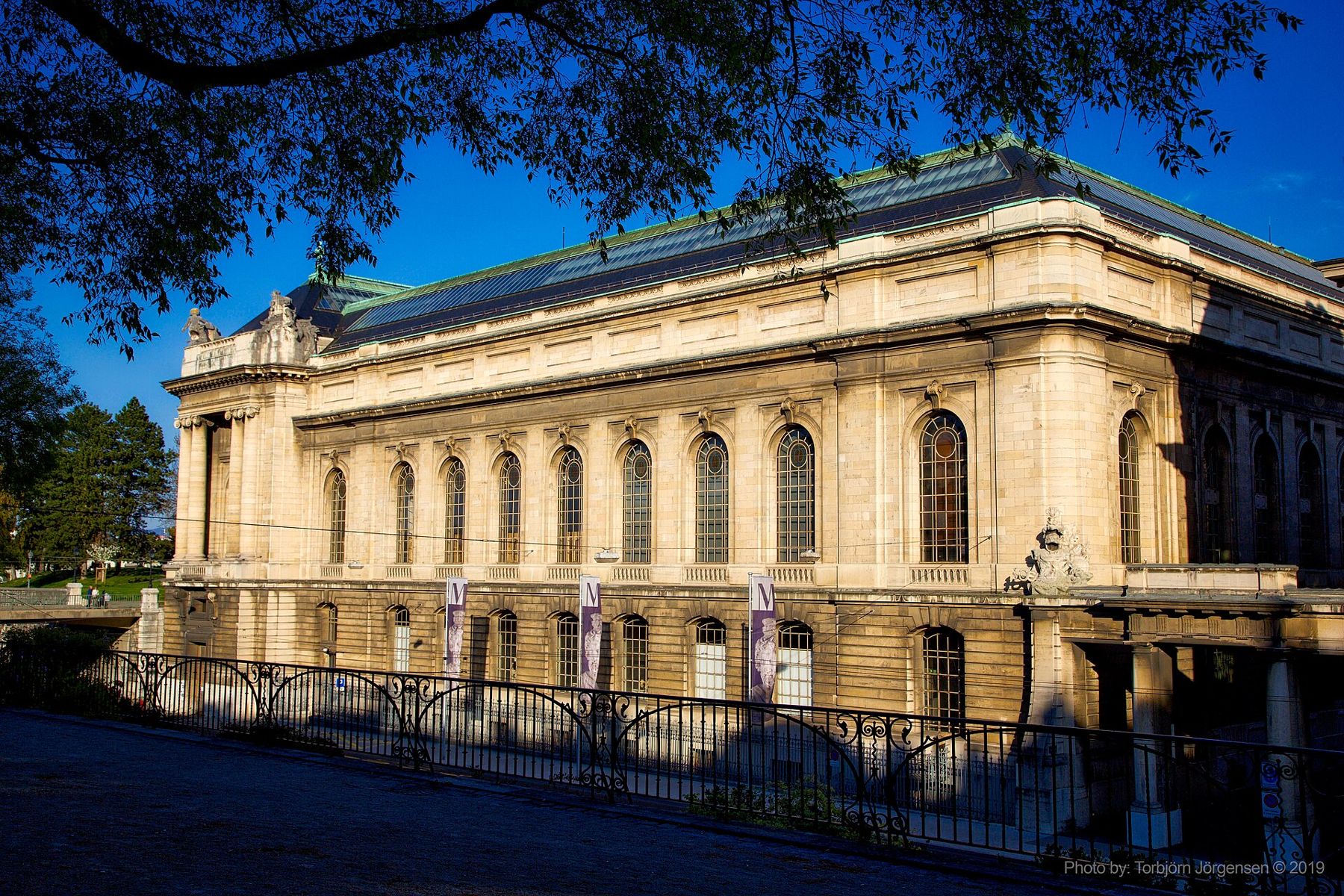
Look at the carved allegories and the long row of arched windows on the façade.
The Musée d'Art et d'Histoire, opened in 1910, is the city's largest museum. It brought together art, archaeology and applied arts under one roof, in a palace-like building designed by the architect Marc Camoletti, with sculpture across its front.
Its best-known work is a panel painted by Konrad Witz in 1444, showing Christ walking on the water while the apostles fish. Witz set the scene on Lake Geneva itself, with the shoreline, the Salève and the Môle behind, and it is often called one of the first realistic landscapes in European painting.
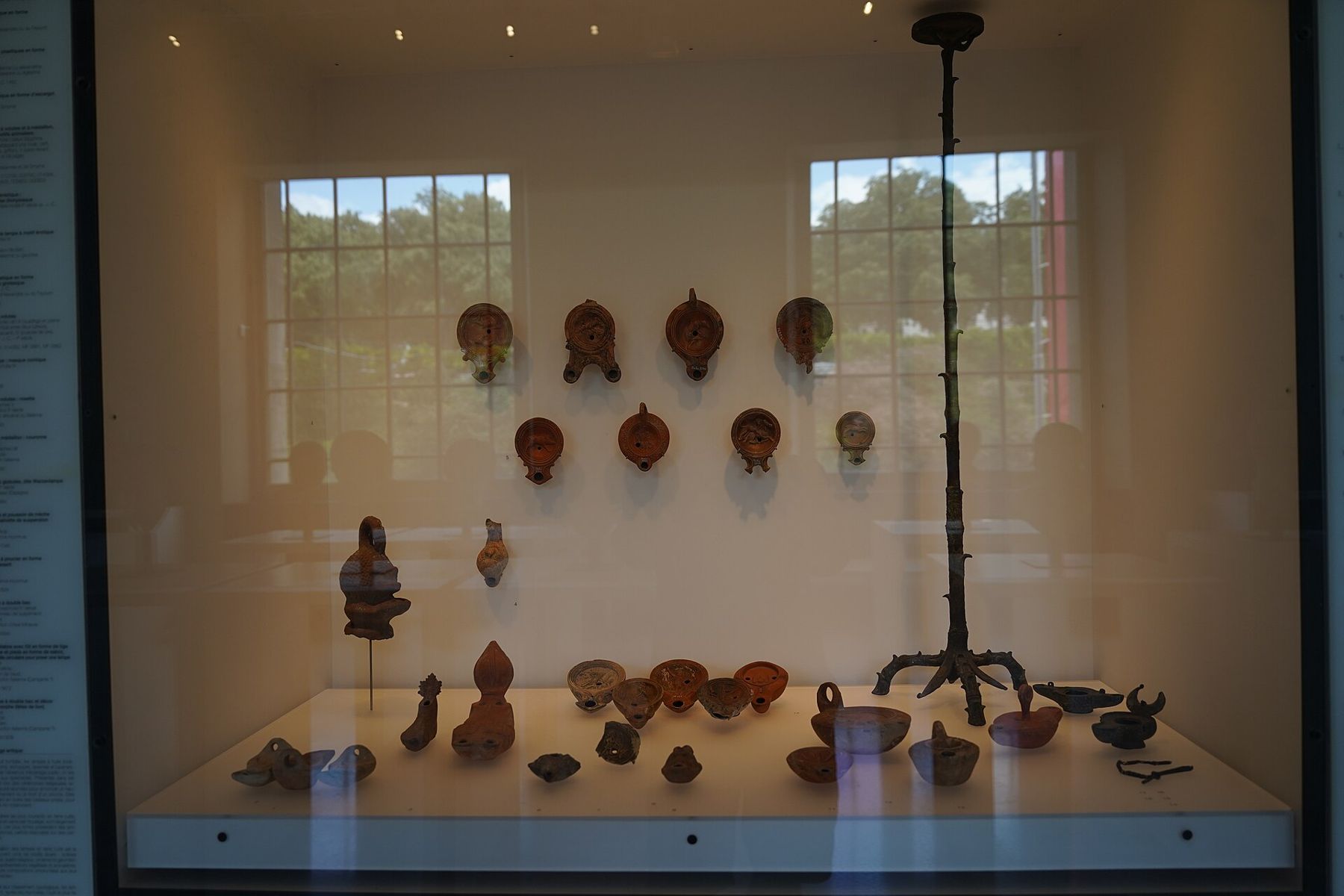
The archaeology galleries hold finds from Egypt, Greece and Rome as well as from Geneva's own Roman past. If you go in, compare the Witz panel with the view you saw from the Treille or the lake: the mountains have not moved.
Walk on · Up the short slope behind the museum to the gold domes, 3 minutes.
Église russe
Look up at the gilded onion domes above the white walls.
The Russian Orthodox church of Geneva was built in the 1860s for the Russian community that had settled in the city, among them aristocrats, writers and exiles. Its white walls, gilded onion domes and crosses make it one of the most unexpected sights in Geneva's quiet residential streets.
The church is still a place of worship, and visitors should respect services and dress modestly inside. The interior, with its icons and painted screen, is very different from the bare Protestant churches of the old town.
Notice the neighbourhood around it, the Plateau des Tranchées, with its nineteenth-century apartment blocks built on the old fortifications. The name recalls the trenches of the defences that once covered this ground, before the city broke out of its walls.
Finishing at the Russian church
The walk ends on the plateau just south-east of the old town. From here it is a few minutes downhill to the lake at the Jardin Anglais, or up the steps into the old town by the cathedral. Trams and buses run along the boulevards below. Toilets are available in the museums when they are open, in the Parc des Bastions and around Plainpalais; drinking fountains are common across the city.
Shade, traffic and markets
The Plaine de Plainpalais has shade only along its tree-lined edges, and its gravel surface throws up dust in dry weather. The boulevards carry heavy traffic, so cross at the lights. On flea market days the plain is crowded; keep valuables close. The rest of the walk is green and calm.
What to walk next
From the Russian church, the cathedral and the old town's lanes are just uphill. Or walk south across the Arve to Carouge, the eighteenth-century town built by the kings of Sardinia.