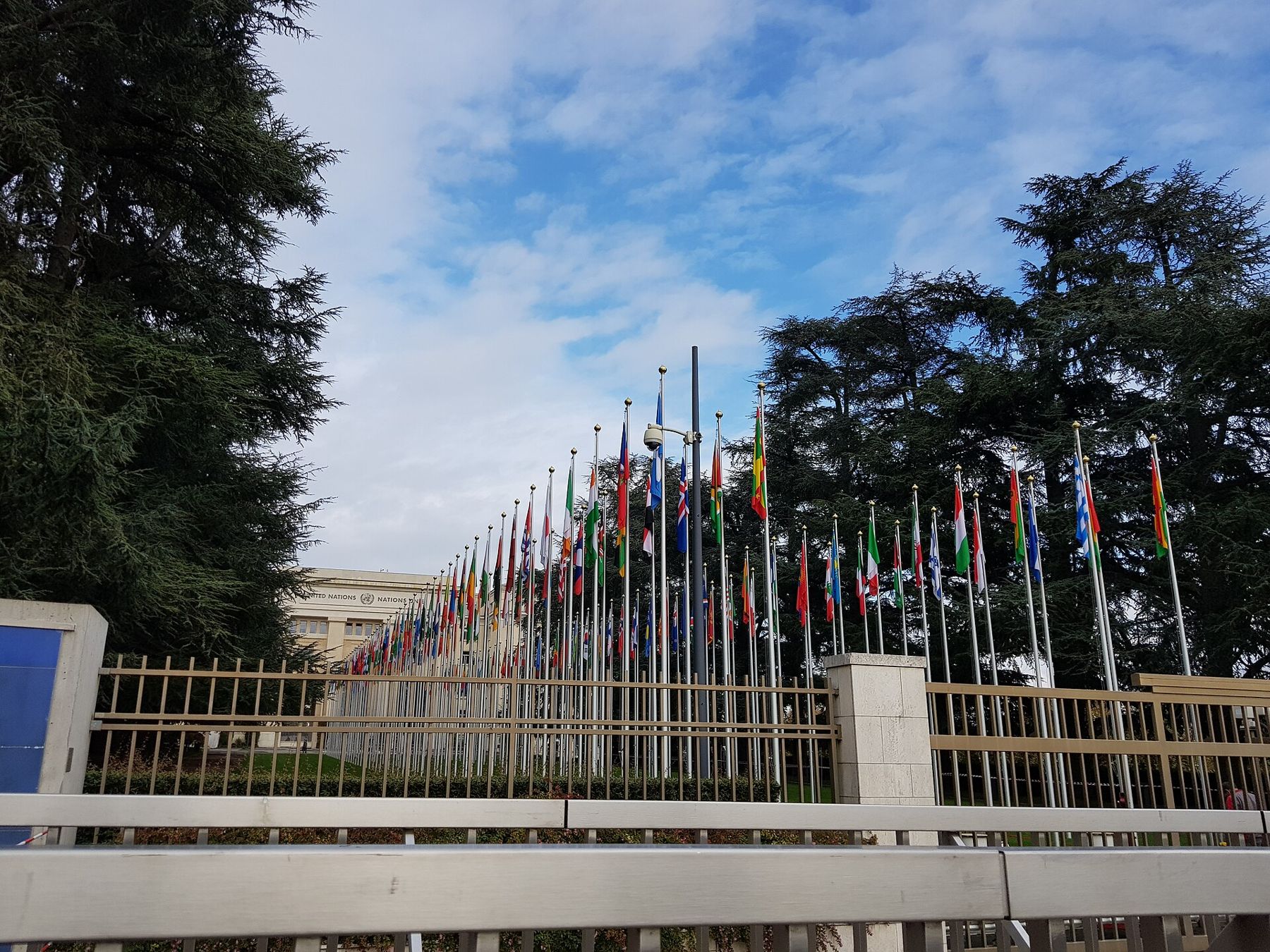
North of the station, on a slope above the lake, lies the part of Geneva that the world knows from the news: the Palais des Nations, the Red Cross, the agencies and missions. Behind the security fences there are also some of the finest parks in the city, a museum in a nineteenth-century collector's palace, and a large botanical garden running down to the shore.
This walk starts in the Place des Nations, with its fountains and its giant three-legged chair, looks at the Palais des Nations from the public side of the fence, passes the Red Cross museum and the Musée Ariana, then winds down through the botanical garden to the lakeside park of the Perle du Lac. It is about 3.2 kilometres and two hours, more if you go into the museums, mostly downhill after the first stretch.
To reach the start, take a tram or bus from Cornavin station to the Nations stop, which is on the square itself; the ride is short, and the walk up from the station takes about twenty minutes. Visits inside the Palais des Nations have their own booking, identity and security rules, which change, so this walk keeps entirely to the outside.
Place des Nations
Look at the jets of water rising straight out of the paving across the square.
The Place des Nations is the open forecourt to the United Nations in Geneva. Its fountains are set flush with the ground, so on warm days children run through them, and the square is a favourite place for photographs with the flags behind.
It is also the city's main place of protest addressed to the international organisations. Groups gather here with banners and speeches to draw attention to wars, human rights cases and causes from every continent, usually peacefully and under police watch. If a demonstration is under way, give it room and walk around the edge.
Notice how the square is arranged: wide, flat and open towards the gates of the Palais, so that the building and its flags are framed at the end of your view. The international quarter was planned to be seen as well as used.
Walk on · To the tall wooden chair at the edge of the square, 1 minute.
Broken Chair
Look at the splintered stump where the chair's fourth leg has broken off.
The Broken Chair is a wooden sculpture about twelve metres high, designed by the artist Daniel Berset and built by the carpenter Louis Genève. It was set up here in 1997 at the initiative of Handicap International, now called Humanity and Inclusion, to call on governments to sign the treaty banning anti-personnel landmines that was being negotiated that year.
It was meant to stand for only a few months, but people grew attached to it and it became a permanent symbol of the square. Its message has widened to include cluster munitions and the harm that weapons of war do to civilians long after fighting ends.
Walk all the way round it. From one side the chair looks solid; from the other the missing leg and the splintered stump are obvious. Notice the size of the wooden joints, made like real furniture, only at the scale of a house.
Walk on · Back across the square to the railings in front of the flags, 2 minutes.
Palais des Nations, from outside
Look along the line of flagpoles behind the railings, one for each member state.
The Palais des Nations was built between 1929 and 1936 as the headquarters of the League of Nations, the international body set up after the First World War. The League failed to prevent the Second World War, and after 1946 the building became the main European office of the United Nations. Today it hosts thousands of meetings a year, from human rights sessions to disarmament talks.
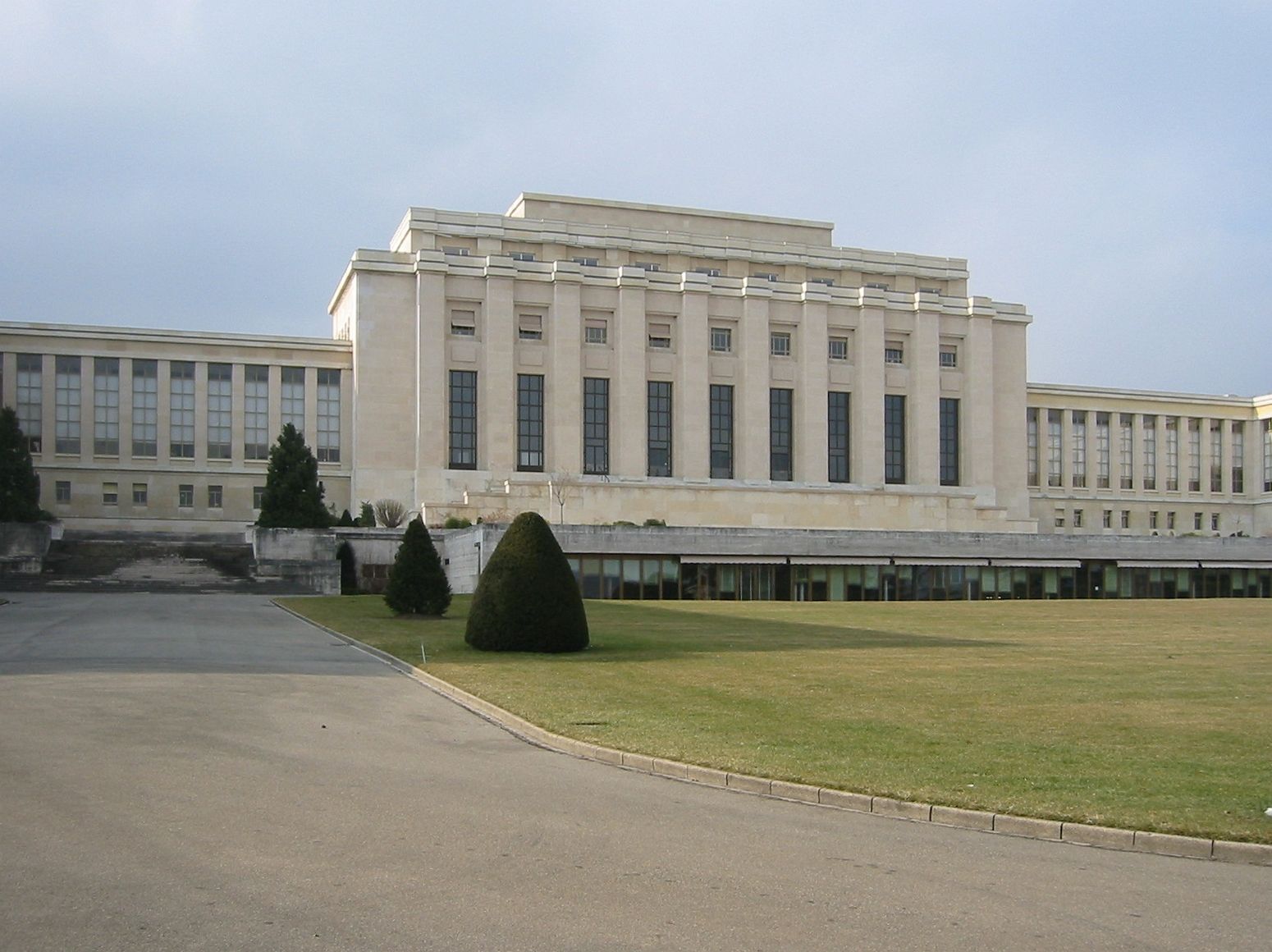
The buildings stand in the Ariana park, an estate left to the city in the nineteenth century, part of which was later given for the League's headquarters. That is why the Palais has lawns, old trees and, it is said, peacocks wandering the grounds.
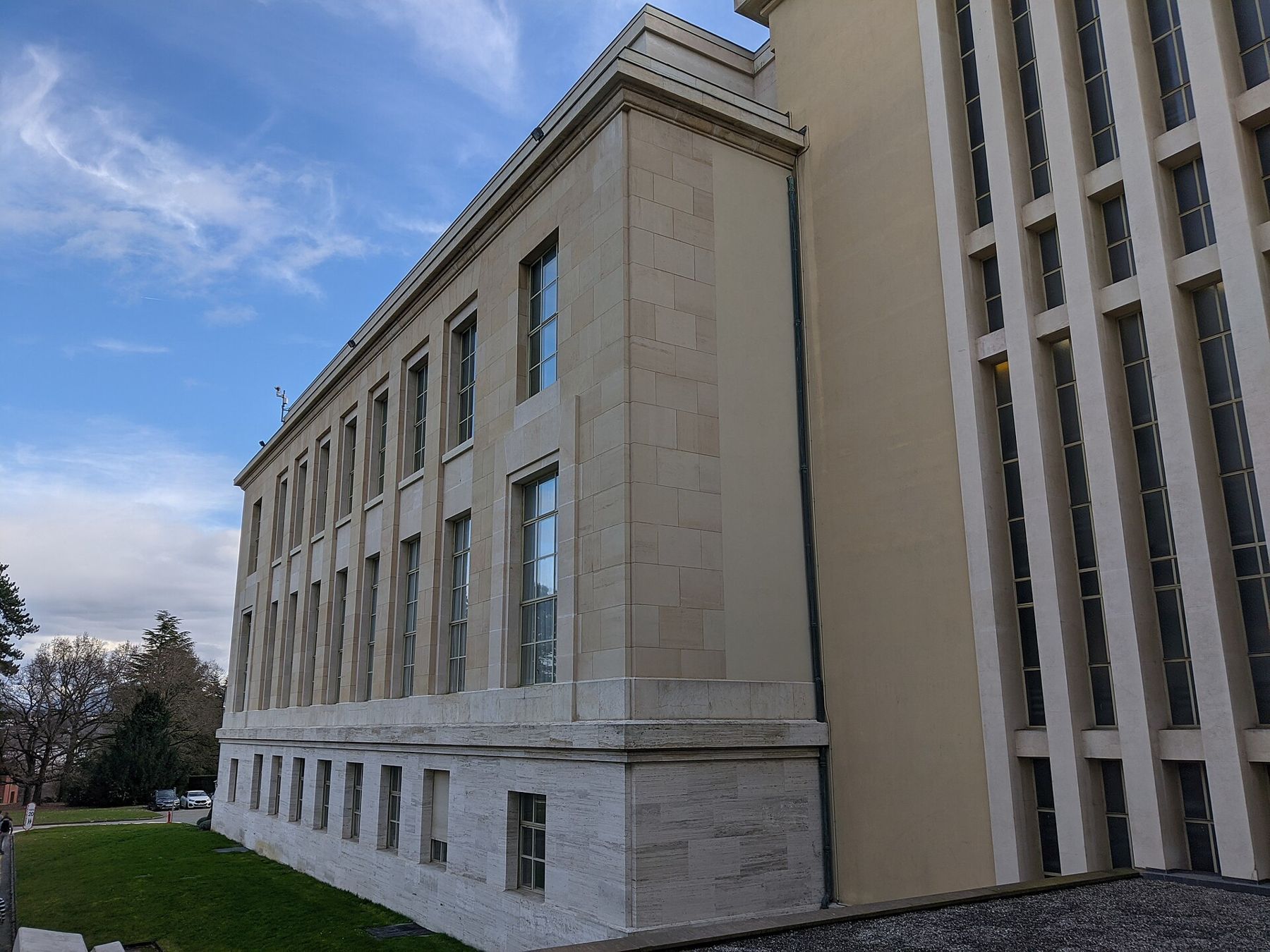
From the railings, notice the stripped classical style of the long pale stone wings, typical of public buildings of the 1930s: columns reduced to flat piers, no ornament, everything symmetrical and solid.
Walk on · Uphill on Avenue de la Paix, Palais fence on your right, to the Red Cross museum, 8 minutes.
International Red Cross and Red Crescent Museum
Look at the low building set into the hillside, half hidden behind its retaining walls.
The International Committee of the Red Cross was founded in Geneva in 1863, inspired by Henri Dunant's account of the wounded left on the battlefield of Solferino. Its headquarters stand on this hill, and its museum, opened in the late 1980s, tells the story of humanitarian work in war and disaster.
The museum building is set partly into the slope, so from the road you see more wall than building. Its exhibitions deal with difficult subjects, including the restoring of family links between people separated by conflict, and the protection of prisoners. Opening times and entry rules change, so check before you plan to go in.
Notice the emblems: the red cross and the red crescent, used side by side to protect the wounded and those who care for them. Using them without authorisation is forbidden under the Geneva Conventions.
 Change here for the Geneva lineThe lakeside, from the Rhône bridges to the Jet d'Eau
Walk on · Back down Avenue de la Paix and follow signs for the Musée Ariana, dome ahead, 10 minutes.
Musée Ariana
Look up at the dome and the curved central bay of the museum's front.
The Musée Ariana was built between 1877 and 1884 by the Geneva collector Gustave Revilliod to house his collections, and named after his mother, Ariane. On his death he left the building, the park and the contents to the City of Geneva. Today it is the Swiss museum of ceramics and glass, with pieces from many centuries and many countries.
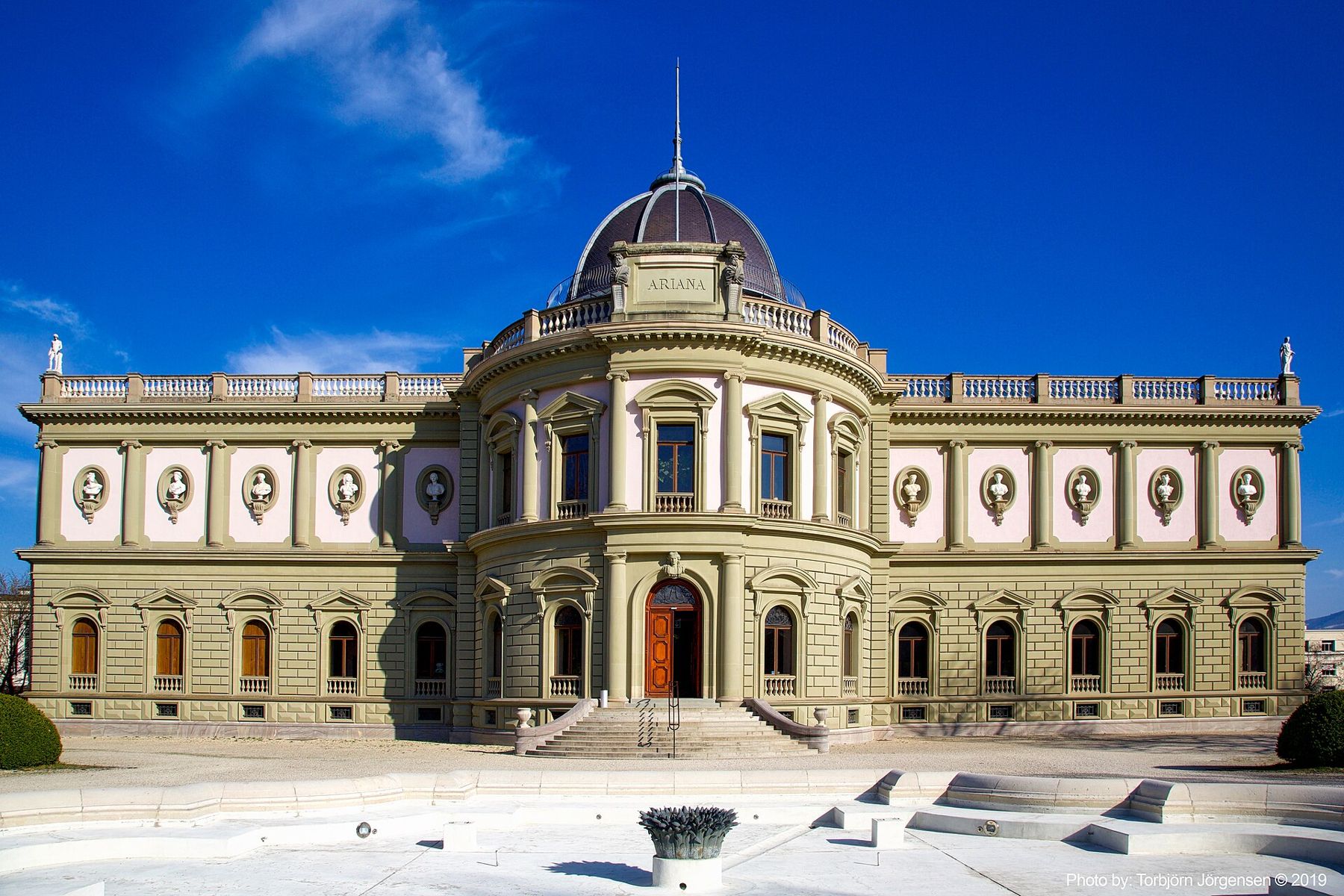
The building is a nineteenth-century fantasy of a Renaissance palace, with columns, a balustraded roof line and a central dome. Inside, the oval hall under the dome rises through the full height of the building, ringed by galleries on slender columns.
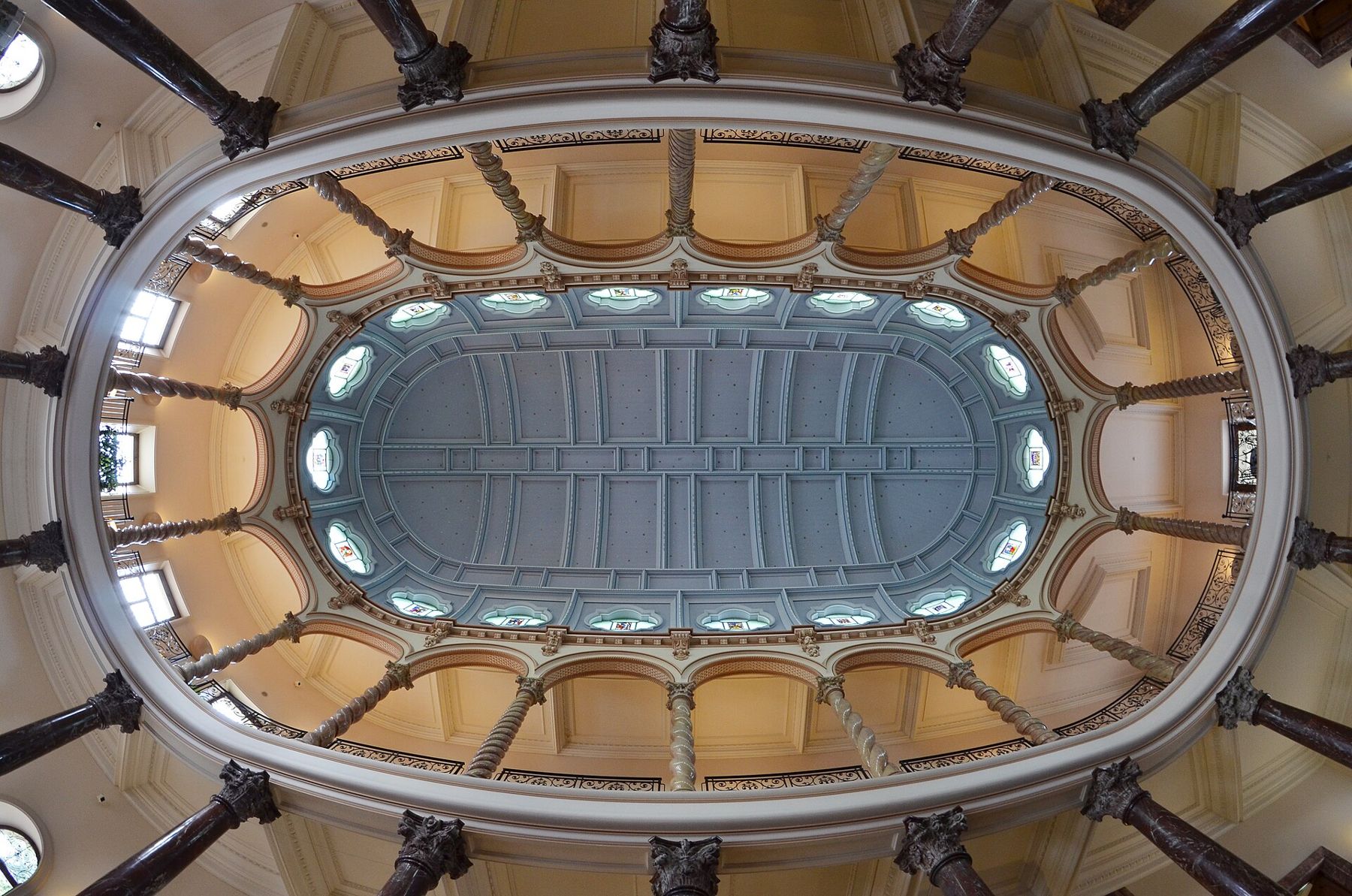
Notice the circular medallions set into the wall between the windows, and the lawns that fall away in front of the museum. On fine days this is one of the quietest spots in the quarter.
Walk on · Downhill north-east to the upper gate of the botanical garden, 8 minutes.
Jardin botanique
Look at the large glasshouse with its curved iron and glass roof.
The Conservatoire et Jardin botaniques de la Ville de Genève moved to this site at the start of the twentieth century from the Parc des Bastions in the old town. The garden spreads over a long slope between the international quarter and the lake, with a rock garden, medicinal and useful plants, an arboretum of large trees and several glasshouses.
Behind the public garden is a scientific institution. Its herbarium of pressed and dried plants is one of the largest in the world, with millions of specimens collected over more than two centuries, and it is used by botanists from many countries.
Notice the labels on the plants: each gives a scientific name and a place of origin, and reading them as you walk is a quick tour of the world's flora. Follow the paths downhill; signs point towards the lake.
Walk on · Through the garden, following signs for the lake, then right along the shore, 12 minutes.
Parc de la Perle du Lac
Look at the pale villa on the rise, then turn round to face the lake.
The Perle du Lac is one of a chain of lakeside parks that once belonged to wealthy Geneva families and passed to the city. Its nineteenth-century villa houses the city's museum of the history of science, with old instruments for astronomy, navigation and physics.
Just to the north, between the botanical garden and the shore, stands the Centre William Rappard, built in the 1920s for the International Labour Office and now the home of the World Trade Organization. Its sober stone front and lakeside garden belong to the same era as the Palais des Nations.
Notice the view across the water: the Jura to the north-west, the Salève and, on a clear day, the Alps to the south-east. Find a bench under the trees and watch the boats on the lake.
Finishing at the Perle du Lac
The walk ends in a lakeside park with lawns, shade and benches. From here you can follow the shore south towards the Pâquis and the city centre, about twenty-five minutes on foot, or catch a bus on Rue de Lausanne, the road above the park. There are public toilets in the park area and in the botanical garden, and drinking fountains along the way.
Security, shade and the slope
The international quarter has a strong security presence. Photographing buildings from the street is normal, but do not climb fences, block gates or film security staff, and follow police instructions. The first part of the walk is along a busy avenue with little shade; the botanical garden and the parks are cool and green. The slope down through the garden is gentle, but some paths are gravel and can be slippery after rain.
What to walk next
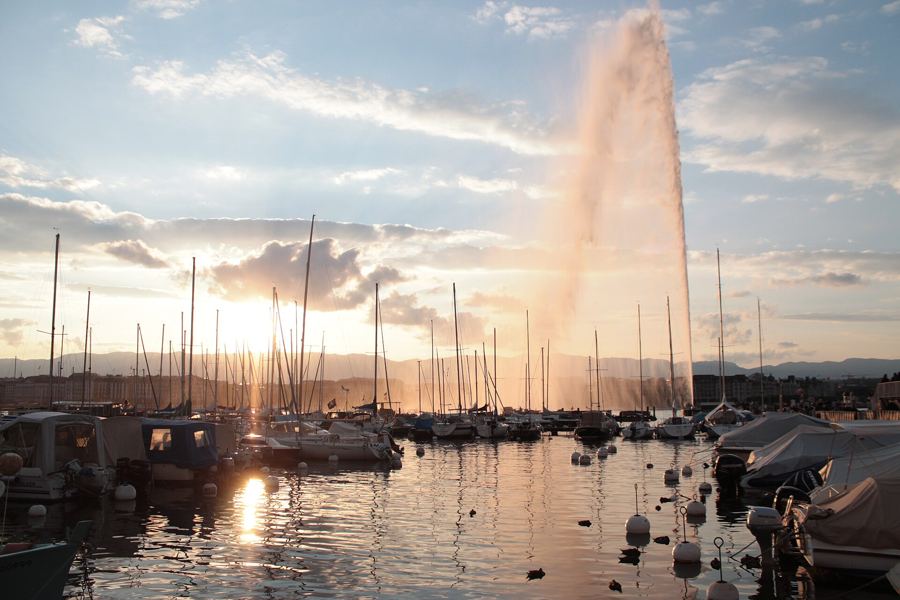
Follow the shore south and you join the lakeside walk to the Jet d'Eau at the Pâquis baths. For history of a different kind, the Vieille-Ville has the town hall room where the first Geneva Convention was signed in 1864.