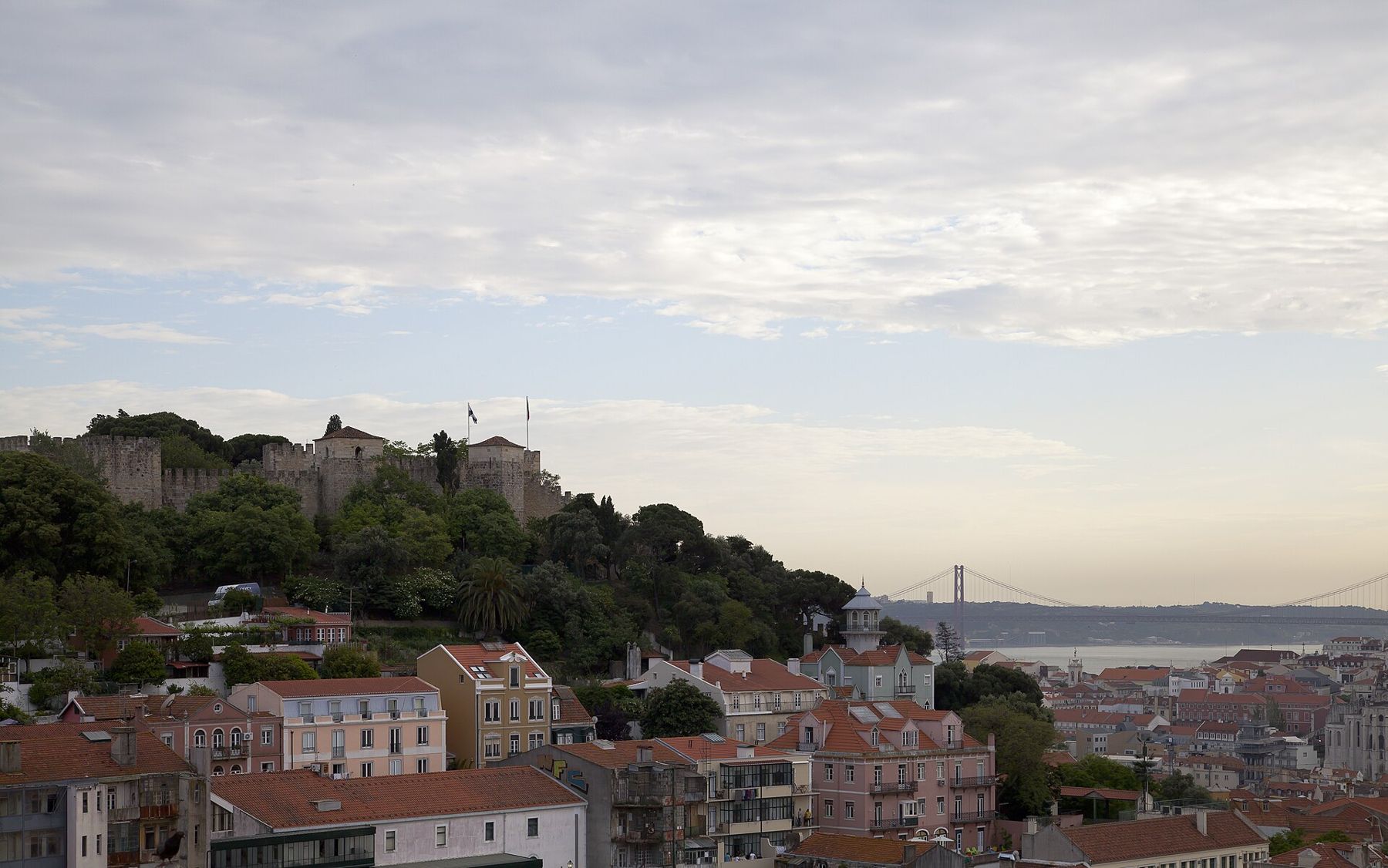
Graça sits on the hill above Alfama, higher and quieter than the castle, and from its terraces you see the whole of central Lisbon at once: the castle, the Baixa grid, the Bairro Alto opposite and the river. It grew from a medieval convent into a working neighbourhood in the nineteenth century, when factories along the river brought families who needed housing, and some of the courtyards built for them survive.
This walk starts at the highest viewpoint, Senhora do Monte, drops to the terrace in front of the Graça church, passes two of the old workers' courts and then descends to the monastery of São Vicente de Fora, the square where the flea market is held and the white dome of the National Pantheon. It is about two kilometres, almost all downhill after the first stop, with some steep lanes. Allow two hours.
Tram 28 stops at Largo da Graça. From there it is a steep walk of about eight minutes up to the first viewpoint.
Miradouro da Senhora do Monte
Look west to find the castle walls, then the Bairro Alto ridge behind them.
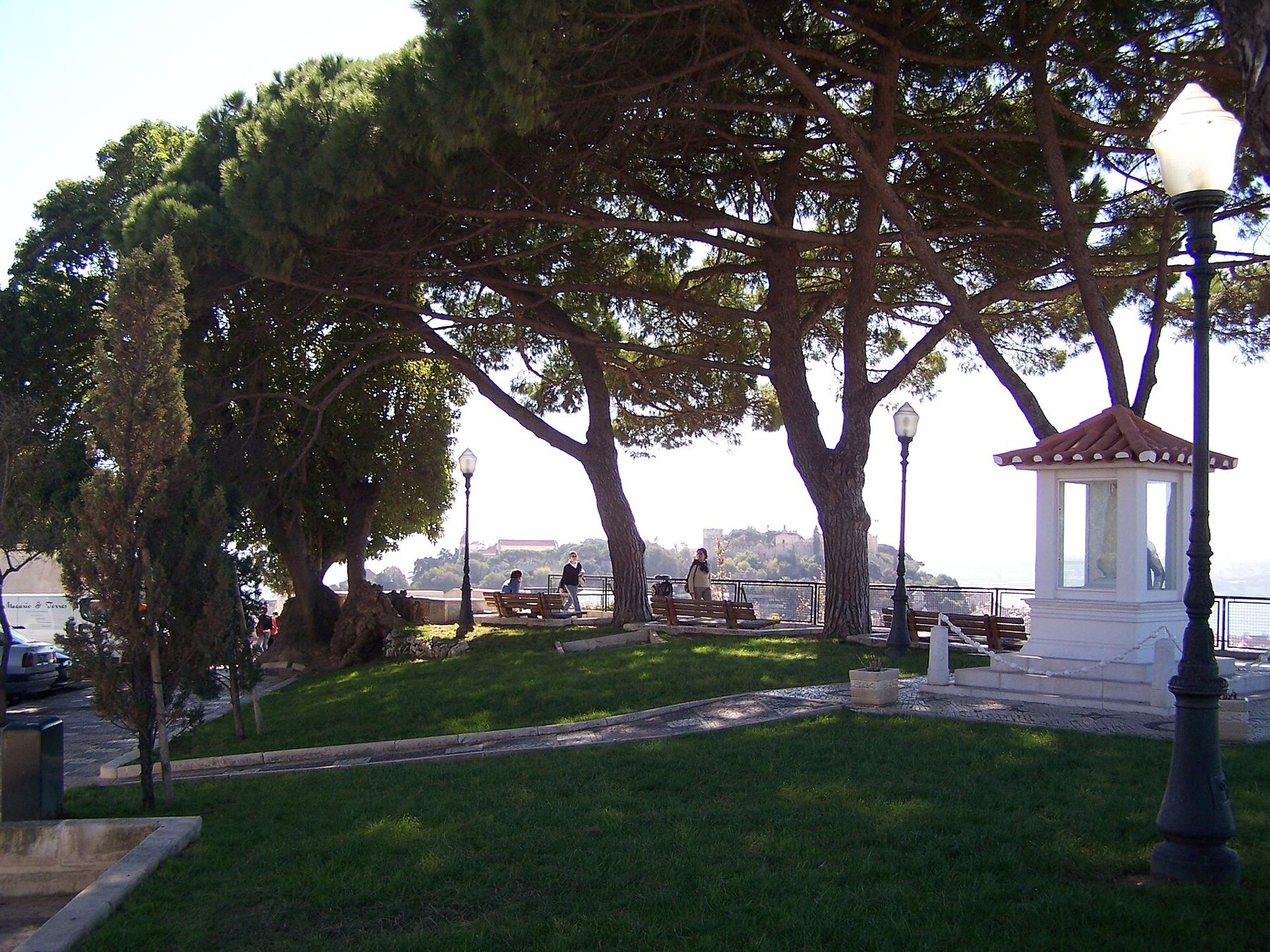
This is one of the highest viewpoints in the city, a paved terrace shaded by umbrella pines beside the little chapel of Nossa Senhora do Monte. The chapel's history reaches back to the years after the Christian conquest of 1147, though the present building is a later rebuilding. A stone chair inside is linked by tradition to São Gens, an early bishop of Lisbon, and was long visited by women hoping for an easy birth.
From the parapet the city lies below you to the south and west: the castle on its hill, the grid of the Baixa, the Bairro Alto, and on a clear day the bridge and the river beyond. Directly below are the roofs of Mouraria, the old quarter outside the walls. The view faces west, so it is at its best towards sunset.
Walk on · Downhill back towards Largo da Graça, then right to the church terrace, 7 minutes.
Miradouro da Graça
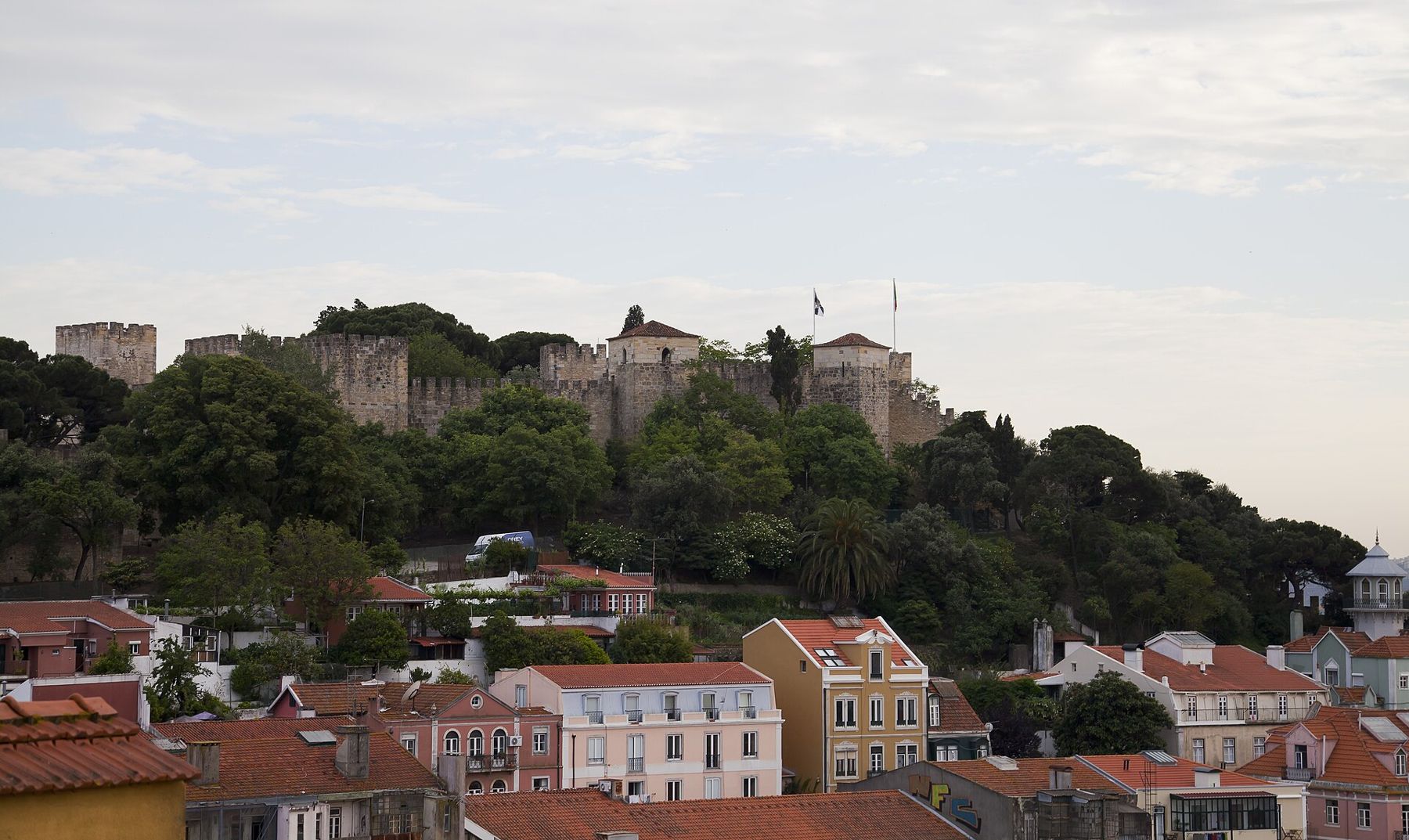
Look straight across at the castle, close enough to see its battlements in detail.
This terrace in front of the Graça church is officially named after the poet Sophia de Mello Breyner Andresen, whose bust stands here, but everyone calls it the Miradouro da Graça. The pine trees and the kiosk make it a meeting place in the evening, and the view is closer and lower than at Senhora do Monte: the castle walls are right in front of you, with the Baixa and the river to the left.
The church and convent of Graça belonged to the Augustinian friars from the thirteenth century. The earthquake of 1755 damaged them badly and they were rebuilt; after the religious orders were abolished in 1834 the convent became army barracks. The church is the starting point of a Lenten procession, the Senhor dos Passos da Graça, one of the oldest in Lisbon.
Walk on · Out onto Largo da Graça and left to the tiled courtyard entrance, 3 minutes.
Vila Sousa, Largo da Graça
Look at the tiled front and the archway leading into the inner court.
In the late nineteenth century, factories along the eastern riverfront drew workers into Lisbon, and private builders put up housing for them around shared courtyards, known as vilas. Vila Sousa, with its tiled front onto the square, is one of the best known in Graça; behind the arch, the flats open onto a common yard.
These courts were the cheap housing of their day, crowded and often poorly served by water and drains, but they built a neighbourhood life around shared space that Graça still has. 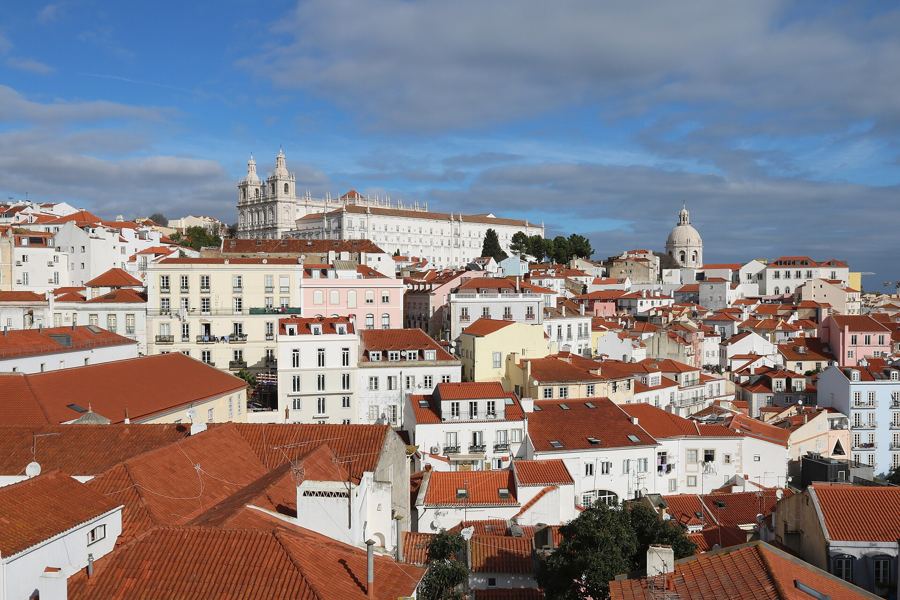 Change here for the Lisbon lineAlfama, from the cathedral to the castle Look at the tiles on the front, mass-produced patterns that were within reach of ordinary builders, unlike the painted panels of churches and palaces. This is a home, not a monument: look from the entrance and keep your voice down.
Walk on · Along Rua da Graça and right into Rua do Sol à Graça, 4 minutes.
Vila Berta
Look along the street at the iron balconies and wooden verandas on both sides.
Vila Berta is a single street of workers' housing built in the early twentieth century, with iron balconies, wooden verandas and decorative tiles on facing terraces. It feels more like a small village street than a city block, and was designed that way: a private, gated row that looked inward on its own life.
In June, during the Santos Populares festivities, streets like this are hung with paper garlands and filled with tables and grills. The rest of the year it is quiet, and its residents are used to visitors who stop at the gate. Look at the details of the balconies, each slightly different, and at the plants climbing up from the street. Here you are as far as you will get from the monuments of the city centre while still in the heart of old Lisbon.
Walk on · Back to Rua da Graça, then downhill south-east towards the white monastery towers, 8 minutes.
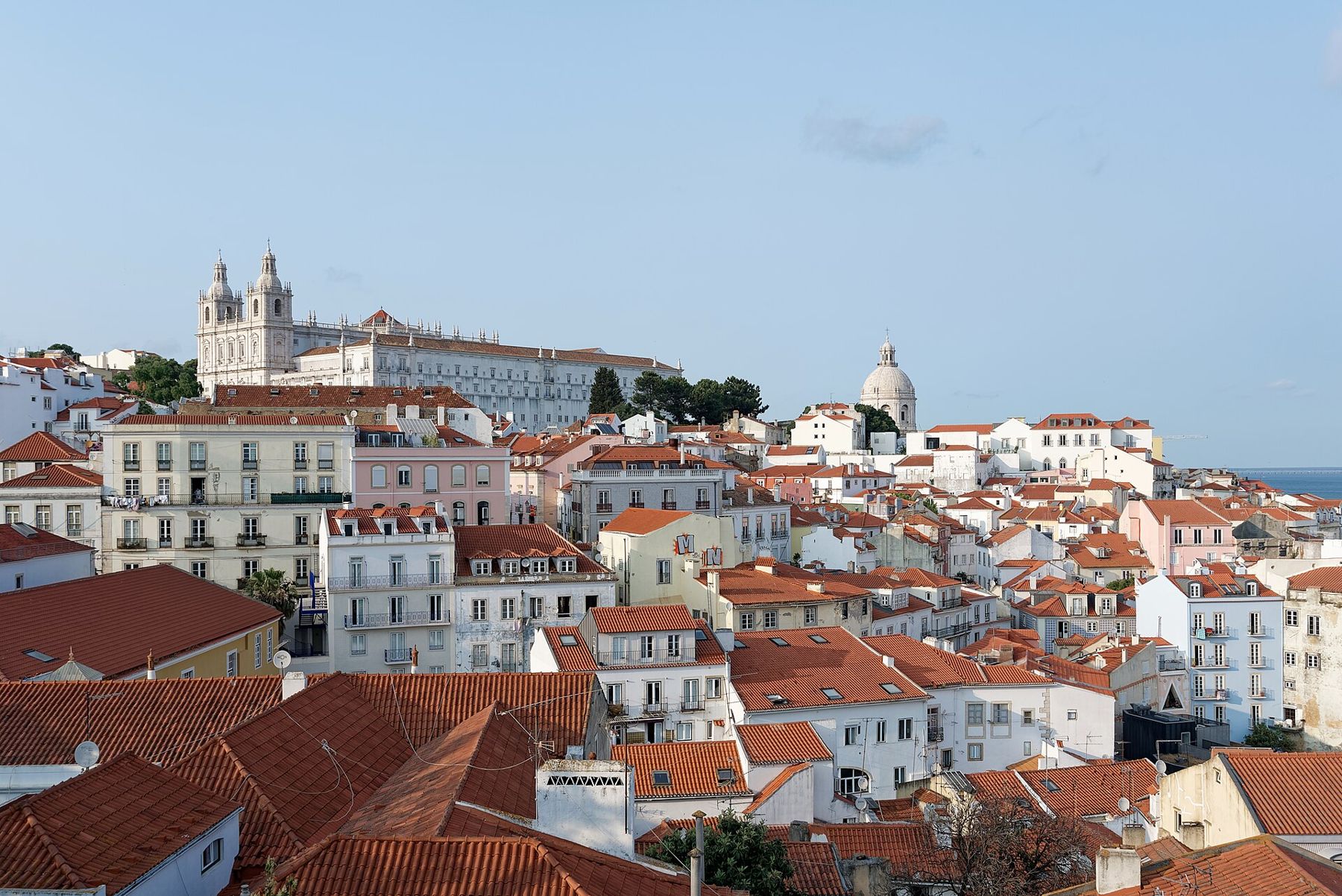
Mosteiro de São Vicente de Fora
Look up at the two white towers framing the broad Renaissance façade.
São Vicente de Fora, of Saint Vincent outside the walls, was founded by Afonso Henriques after the conquest of 1147, beyond the city walls of the time. The building you see was rebuilt from the late sixteenth century, when Portugal was ruled by the Spanish crown, in a sober, classical style that set the pattern for many Portuguese churches after it.
Inside, the monastery holds one of the largest collections of azulejos in the country, including a series of tiled panels illustrating the fables of La Fontaine. The old refectory became the pantheon of the Braganza dynasty, with the tombs of most of the kings and queens of Portugal's last royal house. The monastery and church charge entry and keep hours that change. Turn around on the steps for the view down over Alfama's roofs to the river.
Walk on · East past the monastery's side into the long open square, 2 minutes.
Campo de Santa Clara (Feira da Ladra)
Look at the iron market hall and the open ground beneath the trees.
This long square is home to the Feira da Ladra, Lisbon's flea market, a tradition that goes back to the Middle Ages, though it has moved several times and settled here in the nineteenth century. The name is usually translated as the thieves' market. On market days stalls cover the square with secondhand books, records, tiles, furniture, clothes and everything else; market days and times have changed over the years, so check before you come for it.
On other days it is a quiet open space with a small garden and an iron market hall. Look at the views between the buildings on the south side: the square sits on the edge of the slope, and the river is just below. Notice the different ages of the houses around the square, some with their original tiled fronts.
Walk on · East to the end of the square and the domed white church, 3 minutes.
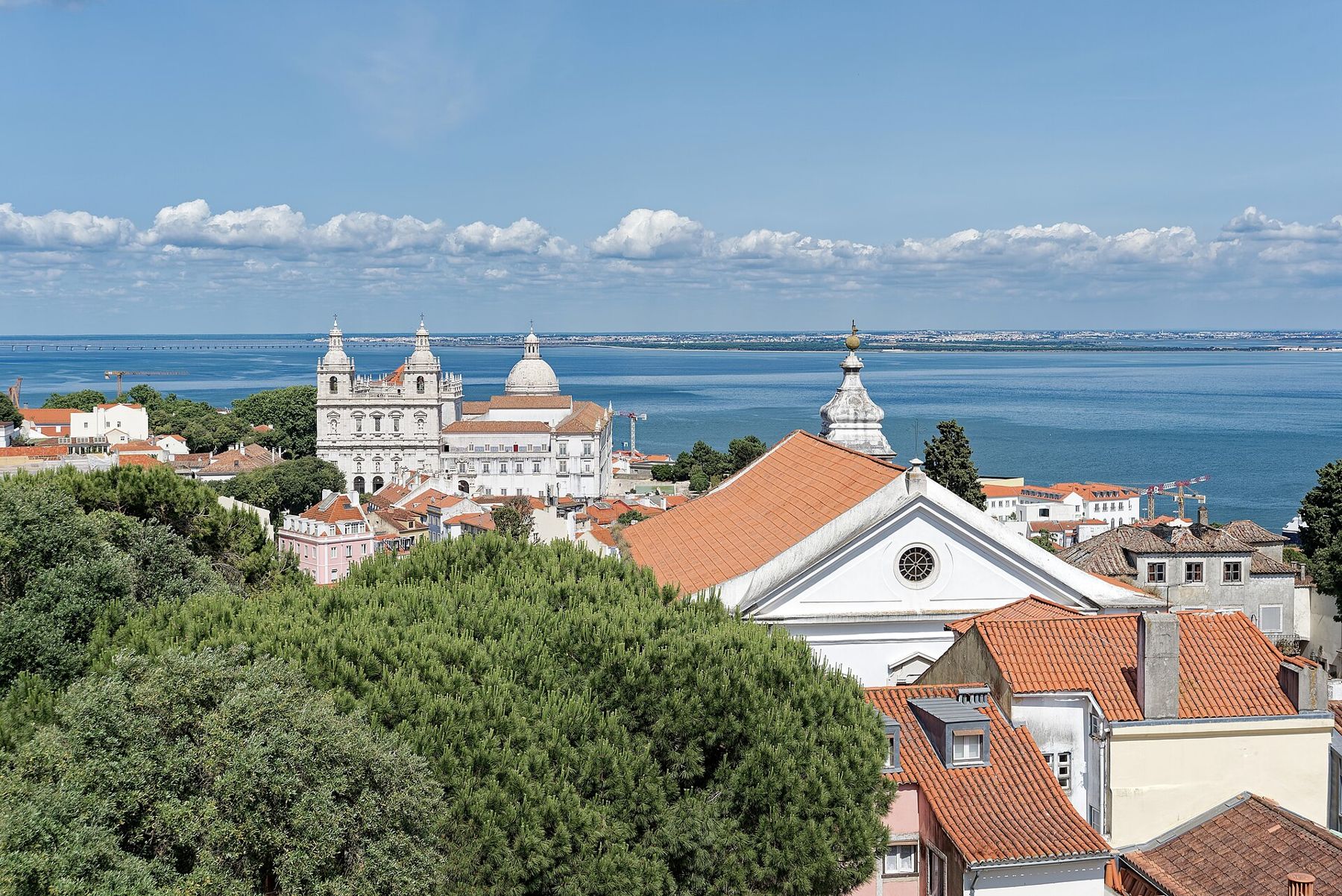
Panteão Nacional (Igreja de Santa Engrácia)
Look up at the white dome rising above the square and the river.
The church of Santa Engrácia was begun in the late seventeenth century and took so long to finish that obras de Santa Engrácia, works of Santa Engrácia, became the Portuguese phrase for a job that never ends. The dome was only completed in the 1960s, when the building was given its present role as the National Pantheon.
Inside are the tombs and memorials of figures Portugal chooses to honour: presidents and writers, the fado singer Amália Rodrigues, the footballer Eusébio and the poet Sophia de Mello Breyner Andresen, whose bust you saw at the Graça viewpoint. The terrace around the dome, reached by stairs, gives one of the widest views over the river; entry is ticketed and hours change. Walk around the outside and you will see the plan: a Greek cross, equal in all four directions.
Finishing at the Pantheon
The walk ends below the Pantheon dome. From here it is about ten minutes downhill to Santa Apolónia, the railway station on the river with a metro stop on the blue line. Tram 28 also passes a few minutes away, on the street behind São Vicente.
Hills, shade and footing
The first part of the walk is a climb, so take it slowly. After Senhora do Monte the route is mostly downhill, with steep, smooth paving that is slippery when wet. Both viewpoints have pines for shade, but the lanes between them and the open square of Santa Clara are in full sun. Carry water. Public toilets are few; the paid monuments have their own. Keep bags close on tram 28 and in the market crowds.
Next
If you still have energy, the Alfama walk starts at the cathedral below and climbs to the castle you have been looking at all along. For a flat contrast, take the Baixa walk along the river.