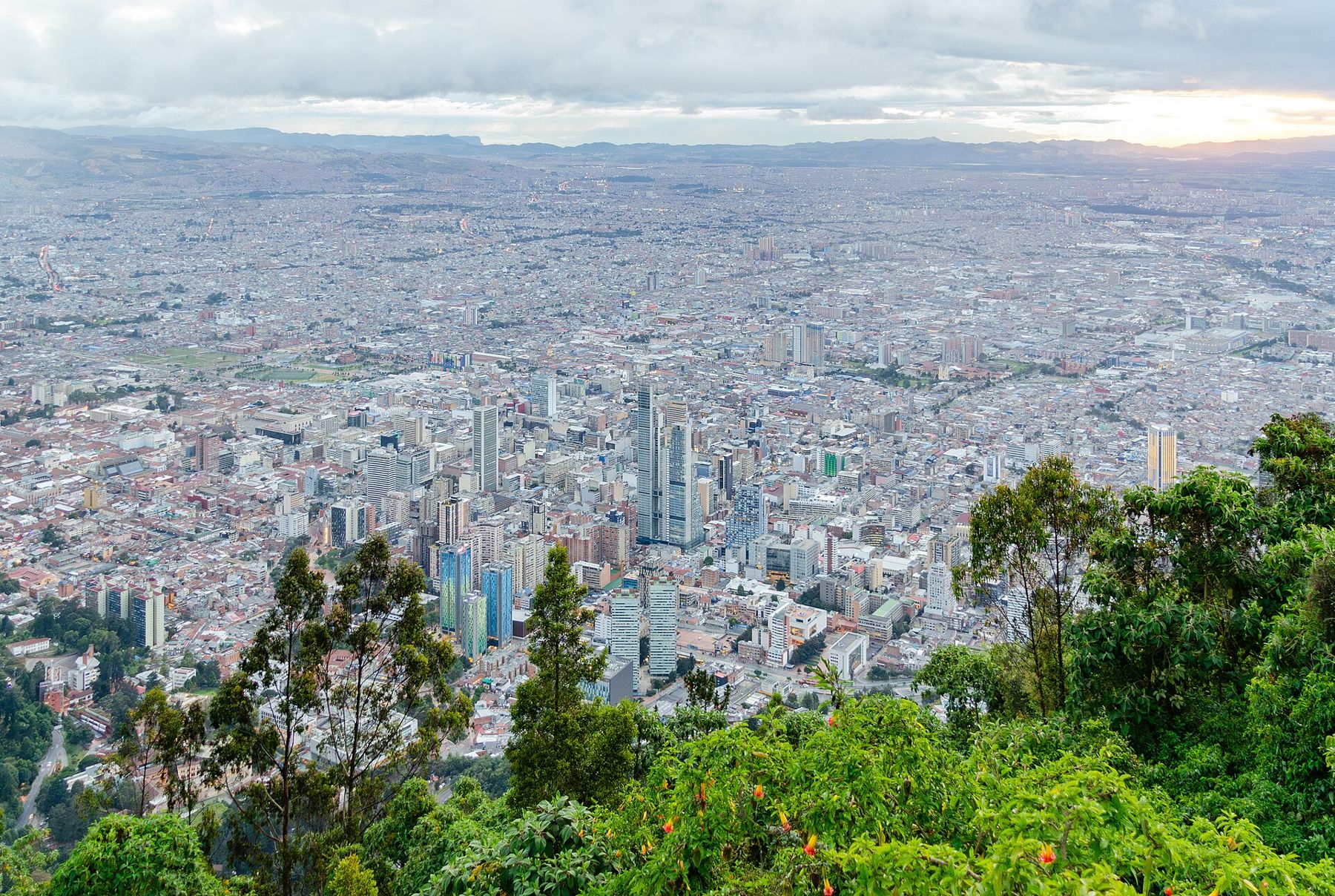
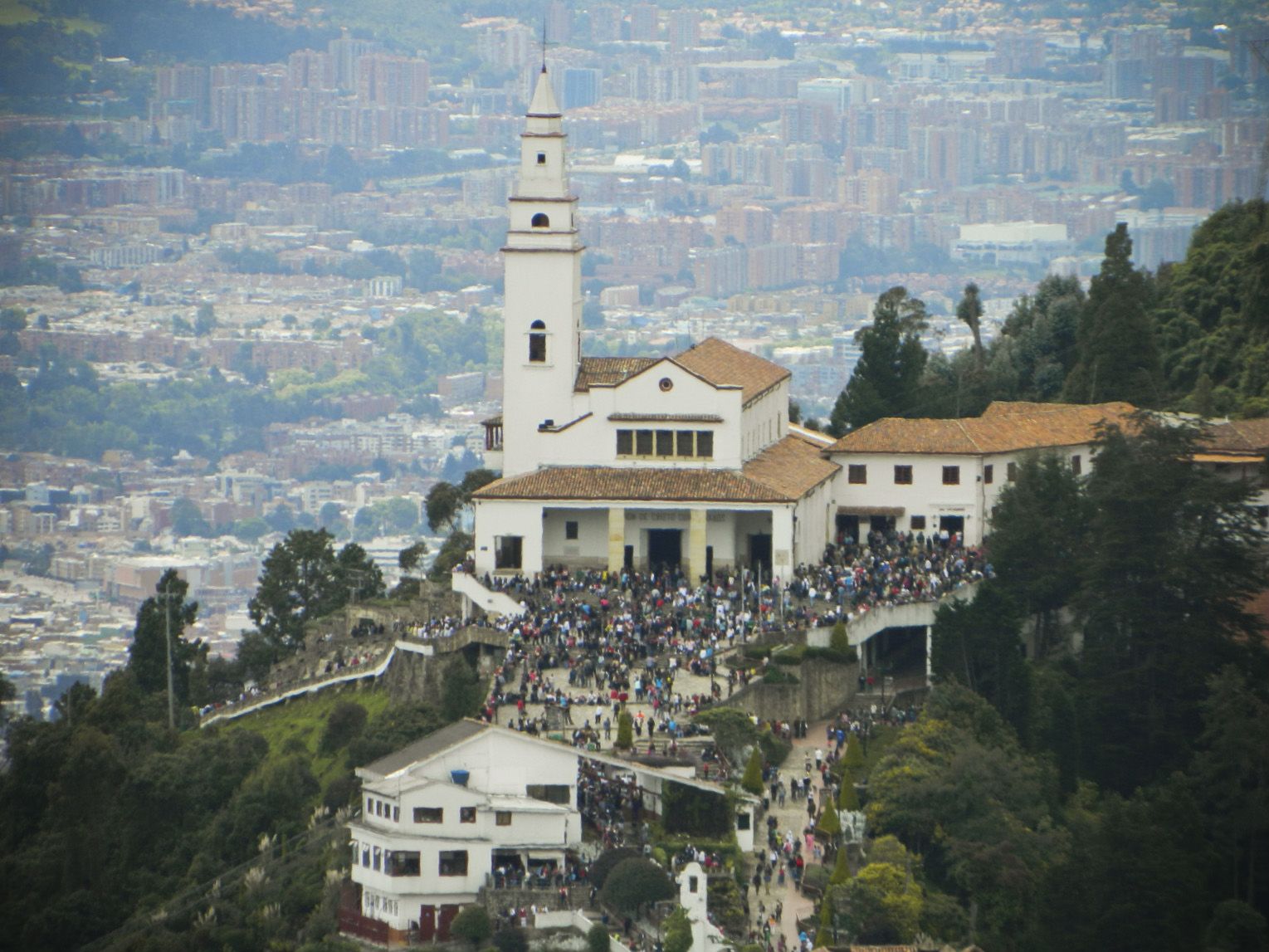
Monserrate is the mountain that watches over Bogotá: a peak of the Eastern Hills crowned by a white sanctuary at about 3,150 metres, visible from almost everywhere in the city. Pilgrims have climbed to it for centuries, and on weekend mornings thousands of Bogotanos still walk up the stone path, for faith, for exercise or for the view.
Be honest with yourself about this walk. The path is a steep, sustained climb of roughly 500 metres up stone steps and ramps, starting at a height where many visitors already feel short of breath. Most walkers take between one and two hours to reach the top. Do not attempt it on your first days in the city, or if you have heart or breathing problems. A funicular and a cable car run up the same mountain, and riding one or both ways is a perfectly good way to visit.
The walk starts at the Quinta de Bolívar, Simón Bolívar's country house, then climbs the pilgrims' path to the sanctuary and the viewing terraces, and ends at the upper stations for the ride down. The Quinta is a short walk uphill from La Candelaria and from the Las Aguas TransMilenio area on the Eje Ambiental, or a short taxi ride from anywhere central.
The path has opening hours and is sometimes closed for maintenance; check before you go.
Quinta de Bolívar
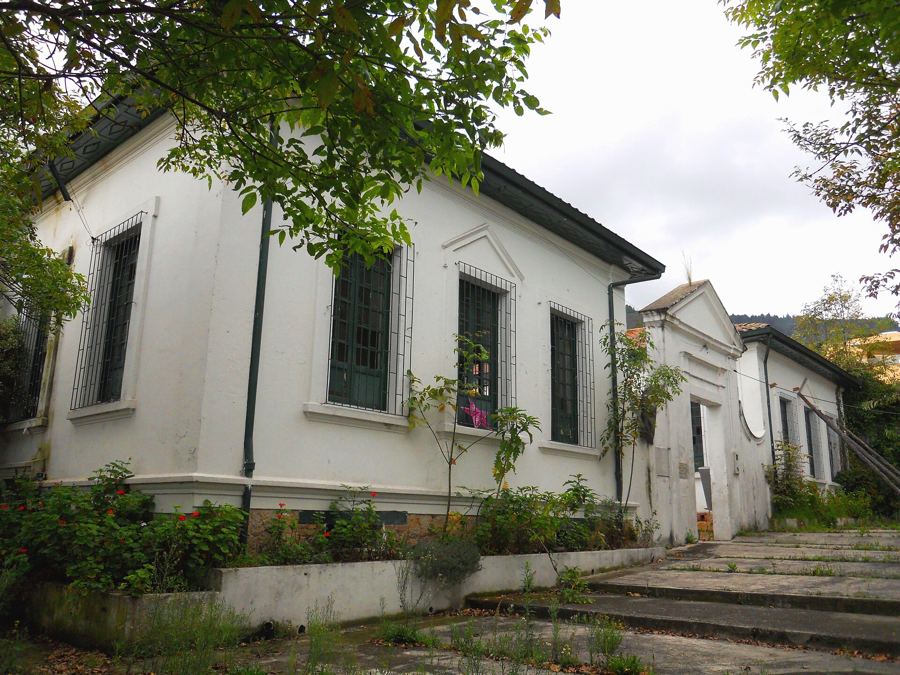
Look at the low white house and its gardens against the hillside.
The Quinta de Bolívar is a colonial country house at the foot of the hills, given to Simón Bolívar by the government in 1820, after the decisive battles of independence. He stayed here at intervals until 1830, and it is now a museum of his life, with furnished rooms and terraced gardens.
Even if you do not go in, it is a good place to stop and prepare. Use the toilets in the area, check that you have water, a warm layer and something to keep off the rain, and look up at the ridge.
Notice how close the mountain is: the city ends almost at this garden wall, and the forest begins straight above it. The white church on the crest is where you are going.
Walk on · Walk uphill along Calle 21 to the station buildings at the foot of the mountain; 4 minutes.
Monserrate lower stations
Look up the hillside for the funicular track and the cable car line.
Two lines climb from this station to the summit. The funicular, which runs on rails up the slope, opened in 1929; the cable car, hanging from cables above the trees, followed in 1955. Which one is running, and when, changes with the day of the week and with maintenance, so check the information at the station.
If you have any doubt about your fitness for the climb, ride up and walk around the summit instead. Nobody will think less of you, and many Bogotanos do exactly that.
Notice the people setting off on foot: families, runners in training gear, older pilgrims with sticks. On weekend mornings the path is busy, which is the best time to walk it.
Walk on · Find the start of the stone path beside the stations and begin climbing; 2 minutes.
Start of the pilgrims' path
Look at the first flight of stone steps, then set a slow pace.
The path is a pilgrims' way, and you will pass the Stations of the Cross as you climb. It is paved for its whole length, with stone steps on the steeper sections and ramps between them.
The single most useful advice for this climb is to start slower than feels necessary. At this height there is noticeably less oxygen in each breath than at sea level, and hurrying the first minutes is the usual reason people struggle later. Walk at a pace where you can still talk, stop whenever you need to, and step aside for faster walkers.
Notice how quickly the city noise fades. Within a few minutes the traffic is below you and the sounds are footsteps, breathing and birds.
Walk on · Keep climbing steadily; rest at the stations of the cross as needed. About 25 minutes.
The middle of the climb
Look back over your shoulder at the towers of the centre below.
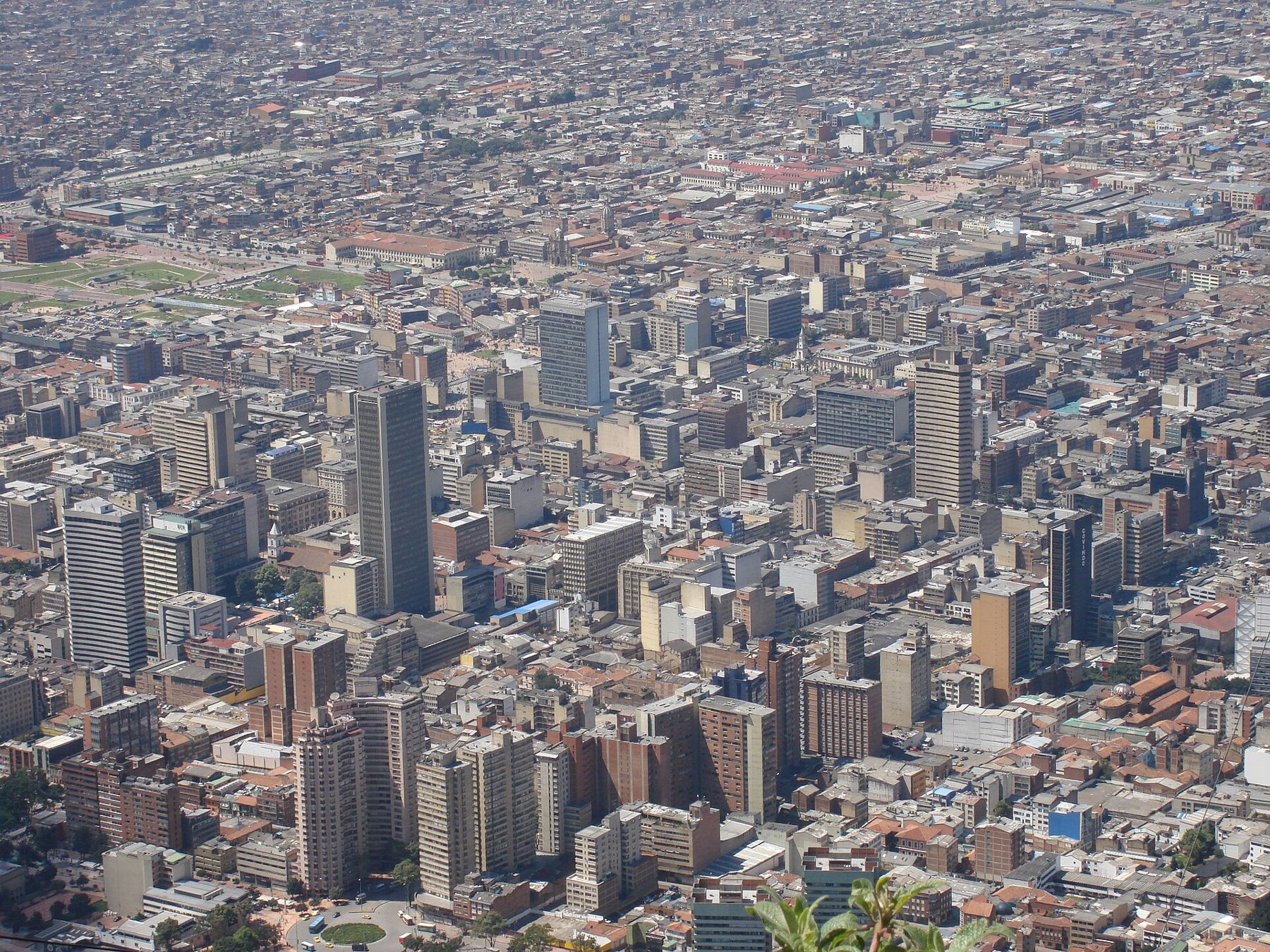
By now the views have opened. Turn round and you can pick out the colonial centre, the tall buildings along the Séptima and the long grid running north. The cable car passes overhead on its way up.
The forest here mixes native Andean plants with eucalyptus and pine, planted on these hills in the twentieth century. The eucalyptus came from Australia and spread widely; you will smell it on a damp morning.
This is a good place to check how you feel. Headache, dizziness or nausea are signs of altitude; if they come on, stop, drink water and rest, and if they do not ease, go back down. There is no shame in turning round.
 Change here for the Bogotá lineUsaquén on a Sunday
Walk on · Continue up the steps; the gradient barely eases. About 25 minutes.
The last stretch
Look up for the white tower of the sanctuary above the trees.
The final section feels long because the summit keeps appearing and disappearing above the trees. Keep your pace even and your breaks short and frequent.
Watch your footing. The steps are worn smooth by centuries of feet, and after rain they are slippery, especially where moss grows at the edges. Use the handrails where they exist.
Notice the people coming the other way, if the path is open for walking down. Many make the climb as a weekly habit, and some pilgrims carry out a promise by making it on their knees for part of the way. It gives the stone steps a meaning beyond the view.
Walk on · Climb the last steps to the terrace in front of the church; 5 minutes.
Santuario de Monserrate
Look at the white church front, then go in toward the altar.
A chapel was built on this summit in the seventeenth century and dedicated to the Virgin of Montserrat, the Catalan mountain shrine that gives the hill its name. The devotion that took over, and still draws pilgrims, is to the Señor Caído, the Fallen Lord: a seventeenth-century statue of Christ collapsed under the cross, which stands above the main altar.
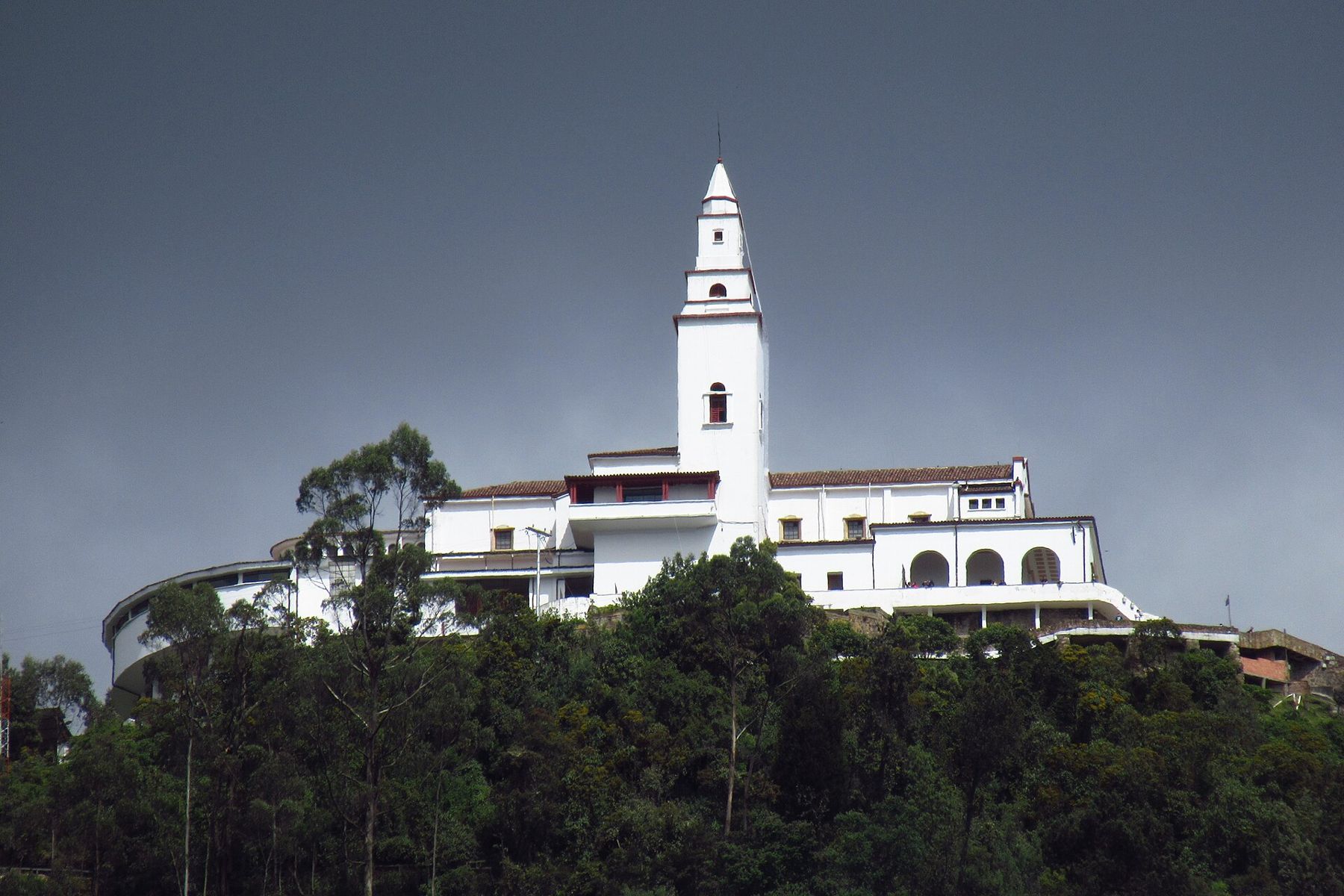
Earthquakes damaged the earlier buildings, and the present church dates from the twentieth century. Masses are held regularly, and on Sundays and religious holidays the church is crowded.
Notice the votive plaques and offerings left by people giving thanks for a favour received.
Walk on · Walk round to the terraces on the city side of the church; 2 minutes.
The viewing terraces
Look west across the whole city to the flat Sabana beyond it.
From here Bogotá fills the plain below you: the old centre at the foot of the mountain, the grid stretching north and west, and beyond it the high plain of the Sabana de Bogotá. On exceptionally clear mornings the far peaks of the Central Cordillera can show on the horizon.
To the south rises Guadalupe, the neighbouring summit, with its own chapel and a large statue of the Virgin.
Clouds move fast at this height. A view that is clear one minute can vanish the next, so take your photographs early and then just look. Behind the church a lane of food stalls sells hot drinks and snacks.
Walk on · Follow the signs back down to the upper stations for the ride down; 4 minutes.
Monserrate upper stations
Look at the cable car cabins swinging out over the drop.
The upper stations of the funicular and the cable car sit just below the summit. Riding down is the sensible choice for most people: it saves your knees, which take a beating on a long descent of stone steps, and it gives you the view one more time.
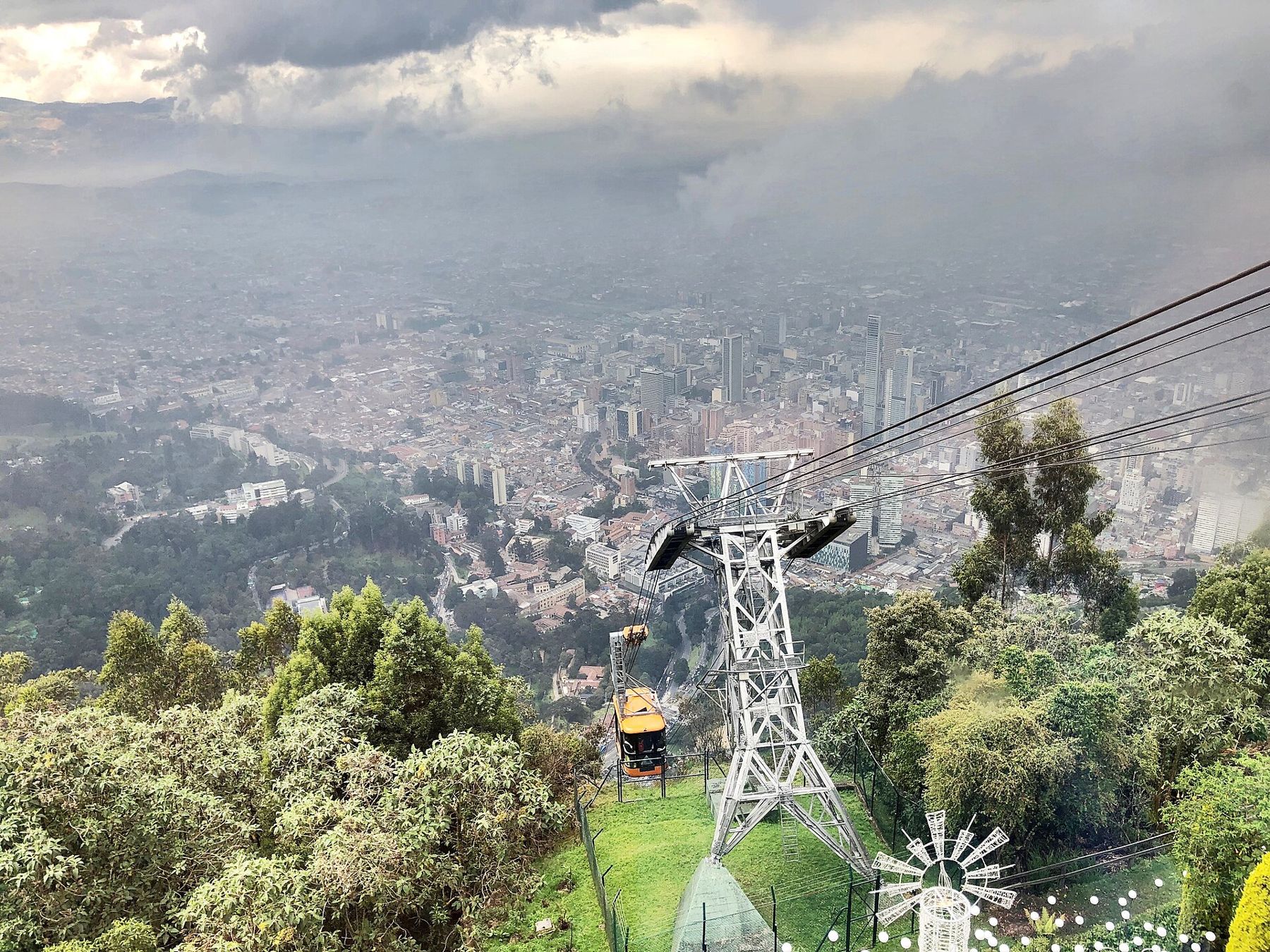
The cable car gives the wider panorama; the funicular gives a closer look at the forest and the slope you climbed. Queues can be long on Sunday afternoons and holidays.
Notice, as you drop, how quickly the city sounds return, and how the cool summit air turns milder by the time you reach the bottom.
Altitude, weather and water
The summit is at about 3,150 metres, some 500 metres above the city. Spend at least a couple of days in Bogotá before you climb, eat lightly beforehand, and carry plenty of water. Dress in layers: the start can be warm in the sun and the top cold and windy. Rain often arrives in the afternoon, which is another reason to start early. The sun is strong at this altitude, so wear a hat and sunscreen even under cloud. Toilets are available at the stations and at the summit.
Safety on the path
Walk the path when it is busy, which in practice means weekend and holiday mornings, and avoid it late in the day. It has opening hours and staff and police are present, but it is still sensible not to climb alone or carry valuables you do not need. Stay on the path.
What next
From the lower stations it is a short walk or taxi back down to the centre. Having seen the city from above, walk its civic heart from the Museo del Oro to Plaza de Bolívar, whose cathedral towers you picked out from the terraces.