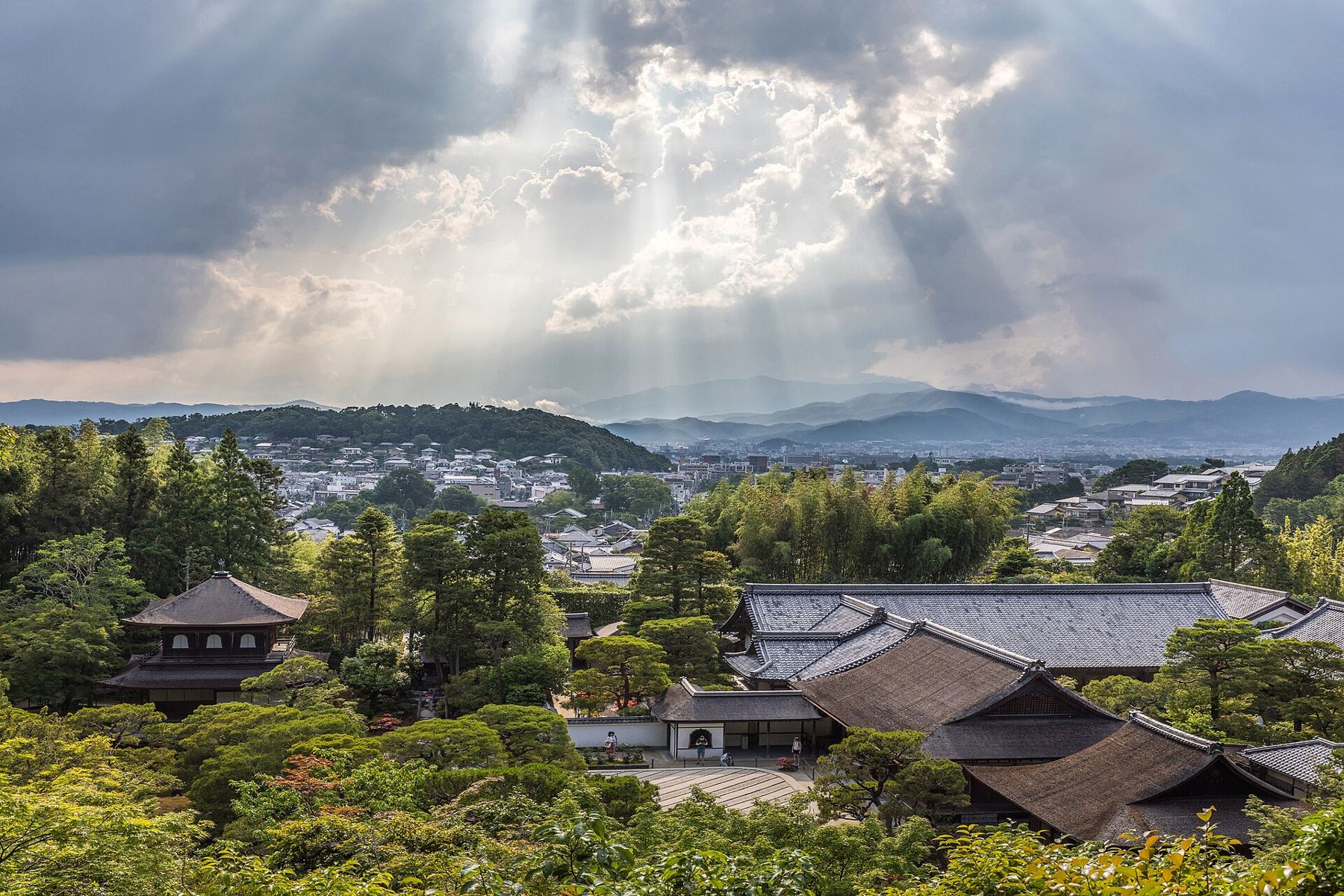
The Philosopher's Path follows a small canal along the foot of the eastern hills of Kyoto, under cherry trees and maples, for about two kilometres. At each end stands a major temple, and along the way smaller temples and shrines open off it up the slope. It is one of the easiest and greenest walks in the city, and almost entirely on the flat.
This walk starts at Ginkaku-ji, the Silver Pavilion, follows the path south with a detour up to Hōnen-in, passes Eikan-dō and ends at Nanzen-ji, under its huge wooden gate and beside the brick aqueduct that feeds the canal you have been following. It is about 3.6 kilometres and takes close to three hours with visits; walking straight through takes under an hour.
To reach the start, take a city bus to the Ginkakuji-michi stop and walk east along the approach road, about ten minutes, crossing the canal at the northern end of the path. In cherry blossom season in spring and the autumn leaf season the path is very crowded; early mornings are calmer. Temple opening times and entry rules change, so check them on the day.
Ginkaku-ji approach
Look at the tall clipped hedge and bamboo fence lining the entrance path.
Ginkaku-ji, officially Jishō-ji, was begun in 1482 by Ashikaga Yoshimasa, the eighth Ashikaga shogun, as a retirement villa. He spent his later years here devoted to the arts: tea, poetry, painting and garden design. After his death in 1490 the villa became a Zen temple.
The entrance path is one of the best things about the temple. You walk between a tall, tightly clipped hedge and a low bamboo fence, with the stone wall rising above, and the path turns so that the garden is hidden until the last moment. It is a design meant to slow you down and leave the street behind.
Notice how the hedge is clipped in sharp, flat planes. The approach has its own name, and gardeners work on it constantly.
Walk on · Through the gate and into the garden, following the one-way route, 3 minutes.
Ginkaku-ji garden
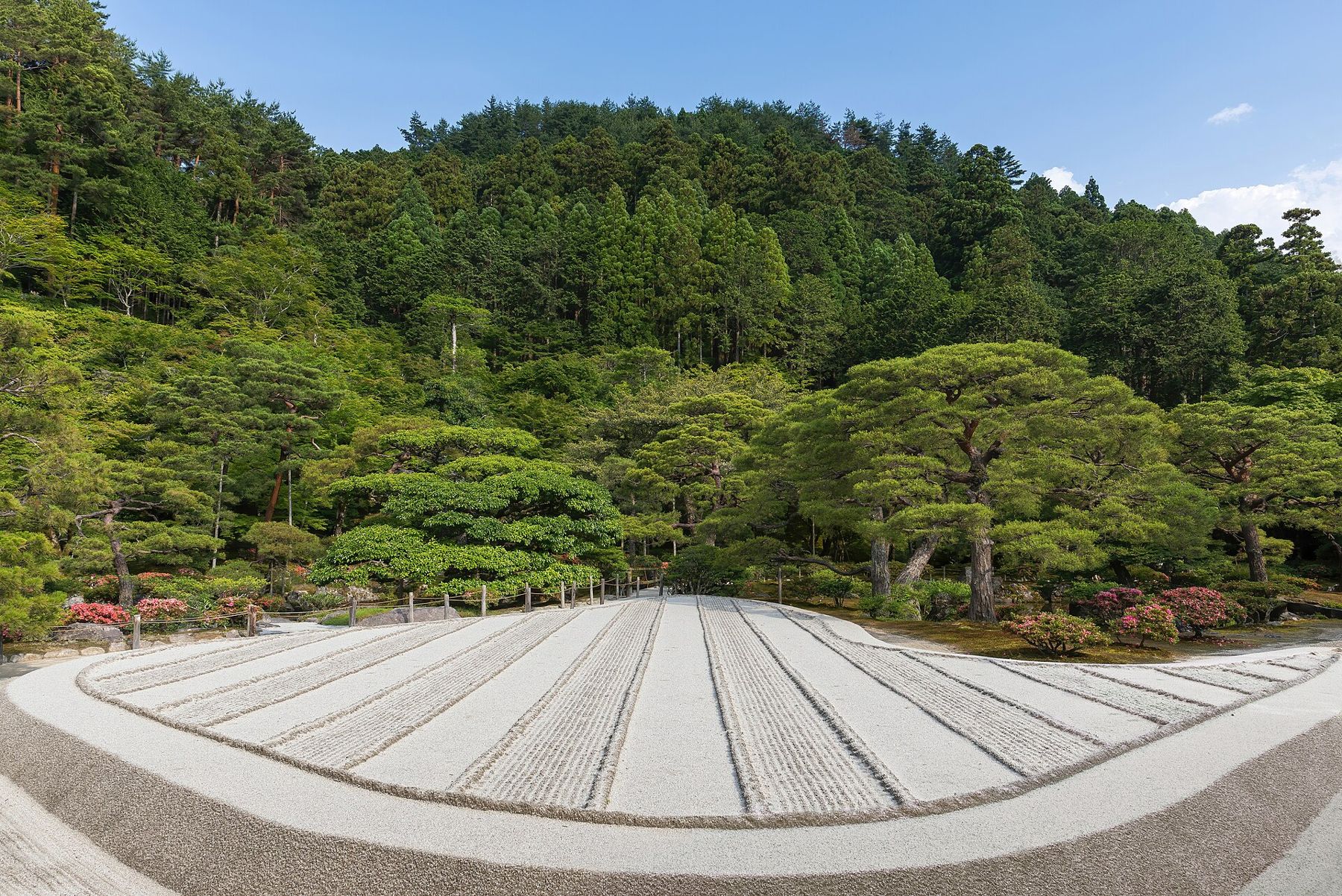
Look at the flat-topped cone of white sand beside the sea of raked gravel.
The Silver Pavilion, a two-storey wooden building beside the pond, was never covered in silver, whatever its nickname suggests. Its quiet, dark timber is the point. Beside it lies a broad bed of pale sand raked into lines, called the sea of silver sand, and a flat-topped cone of sand, often called the moon-viewing platform. Both are thought to have taken their present form after Yoshimasa's time.
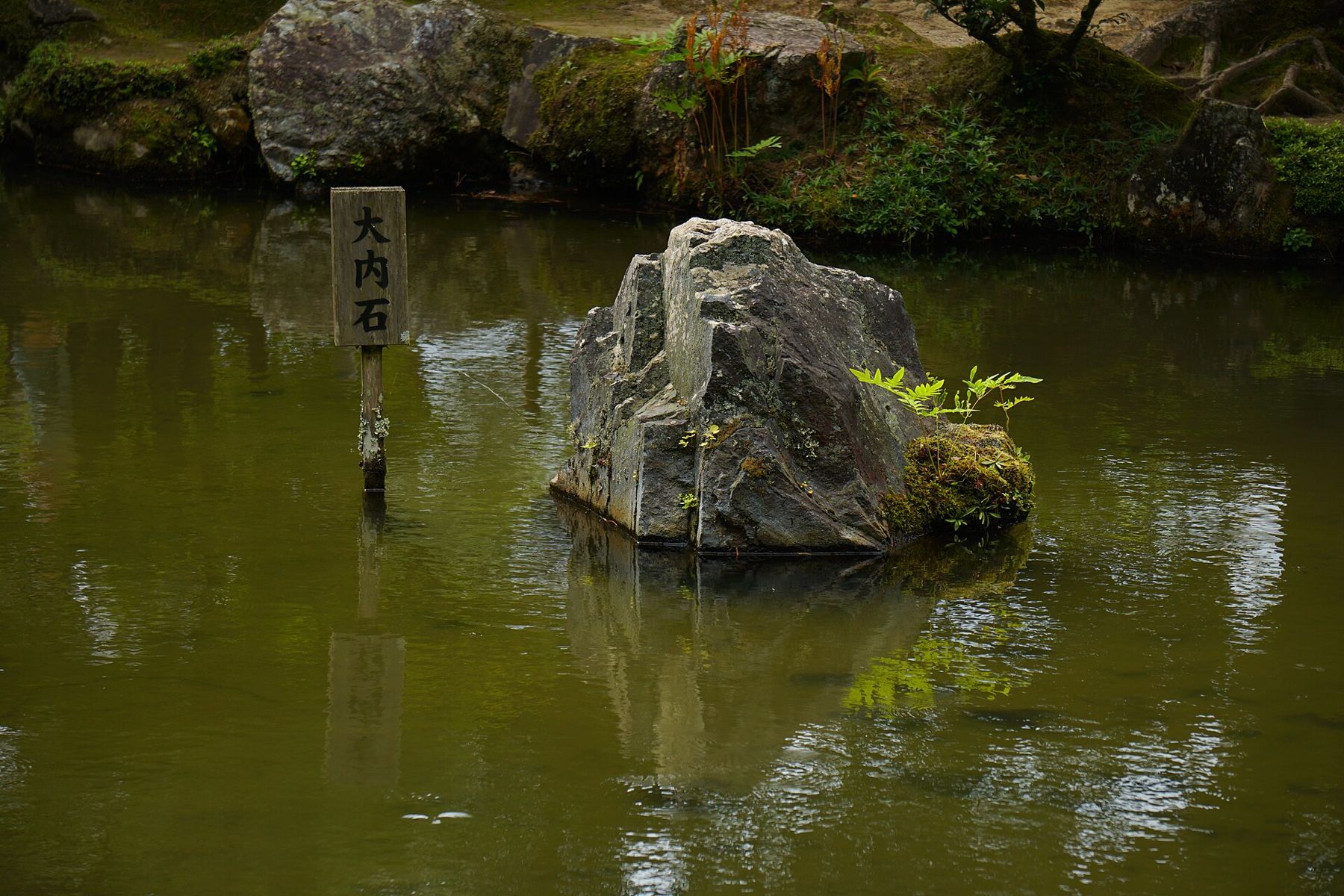
The garden route continues past a pond with carefully placed stones, then climbs the hillside behind. From the top, you look down on the pavilion and the Tōgudō hall, which holds one of the oldest surviving rooms in the shoin style, the ancestor of the classic Japanese tatami room.
Walk on · Out of the temple and back down the approach road to the canal bridge, 8 minutes.
Philosopher's Path, northern end
Look along the narrow canal running south under the overhanging cherry trees.
Here the path begins, beside a stone-lined canal. The water is a branch of the Lake Biwa Canal, a great engineering project of the late nineteenth century that brought water from Lake Biwa, over the hills to the east, into Kyoto for drinking, irrigation, transport and power.
The path takes its name from Nishida Kitarō, a philosopher at Kyoto University in the early twentieth century, who is said to have walked here daily while thinking. Japanese visitors know it as Tetsugaku-no-michi.
Notice the bridges: dozens of small stone and concrete crossings, each leading to a house or a lane up the hill. Many of the cherry trees along the path were planted in the early twentieth century, and their branches reach out over the water.
Walk on · South along the canal for about 10 minutes, then left uphill on the signed lane to Hōnen-in.
Hōnen-in
Look through the thatched gate at the two white sand mounds beside the path.
Hōnen-in is a small temple among trees, dedicated to the memory of Hōnen, the twelfth-century monk who founded the Pure Land school of Japanese Buddhism. The present temple dates from the seventeenth century.
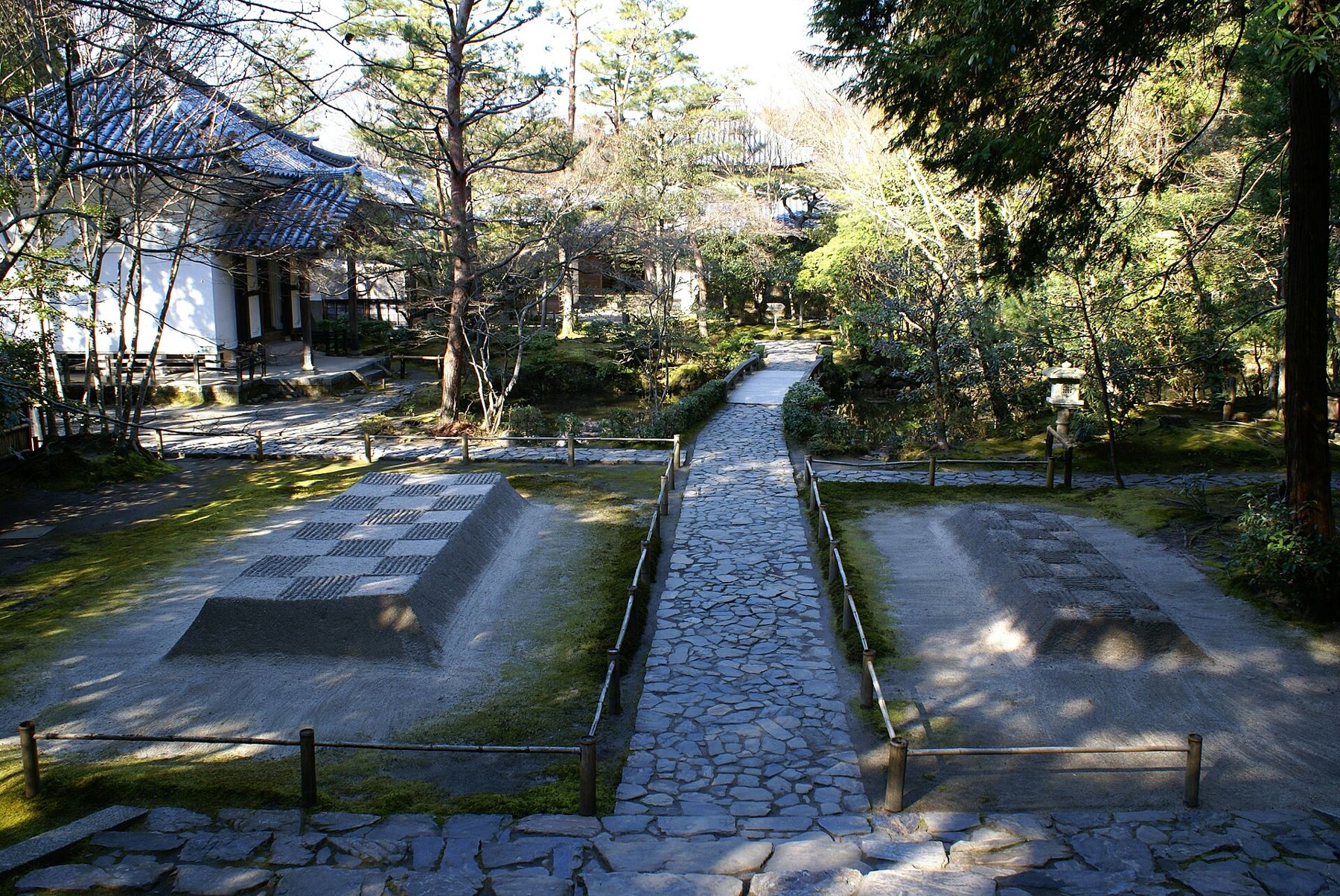
You enter under a gate with a moss-covered thatched roof. Just inside, the path passes between two low rectangular mounds of white sand, their surfaces raked into patterns that change with the seasons. Walking between them is meant to purify you as you enter.
The temple cemetery holds the graves of several writers and scholars, among them the novelist Tanizaki Jun'ichirō. Notice how dark and green the grounds are compared with the open path below: moss, ferns and tall trees close in on every side. The temple's grounds are open on most days; its inner halls open only at certain times.
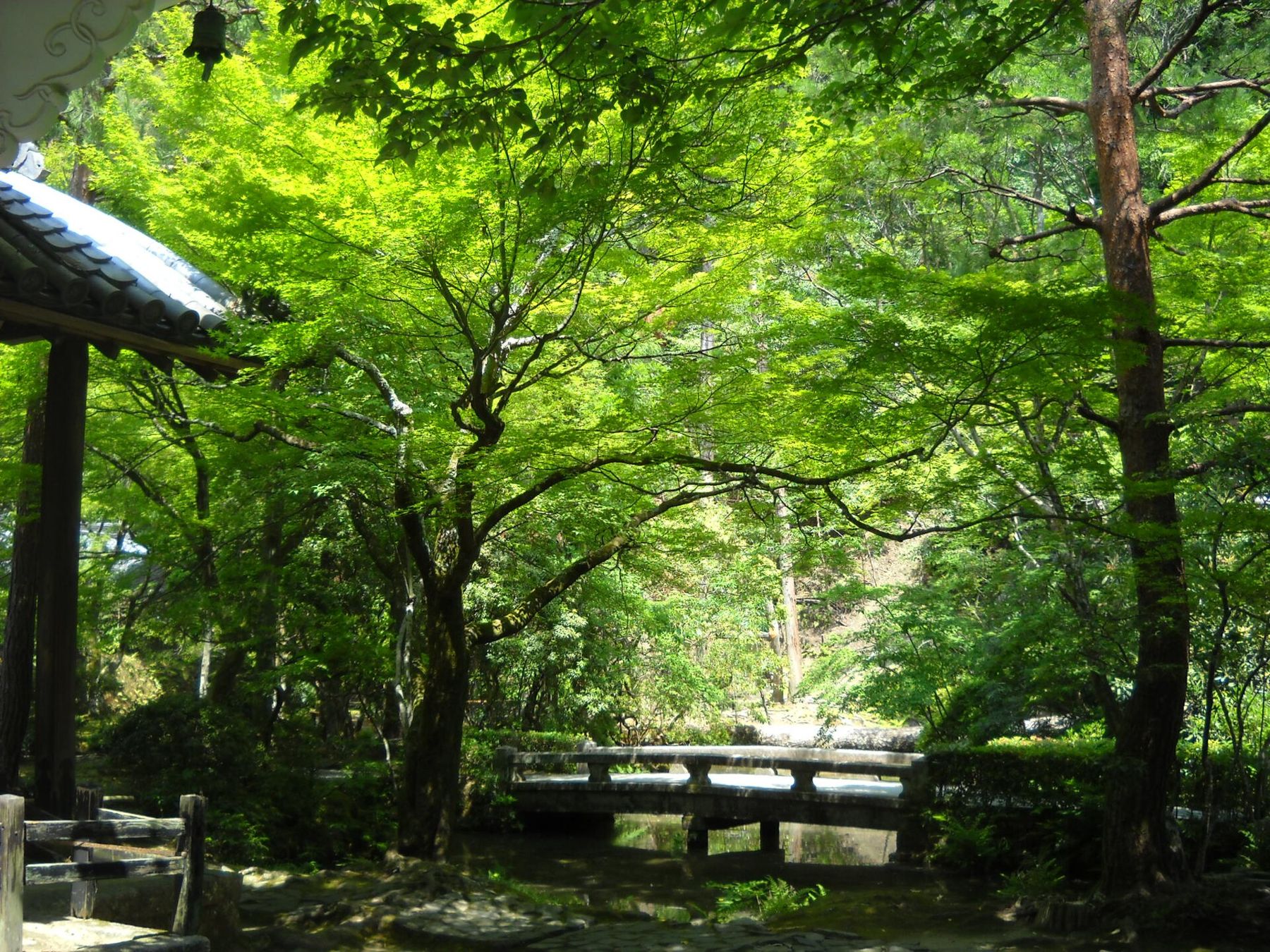
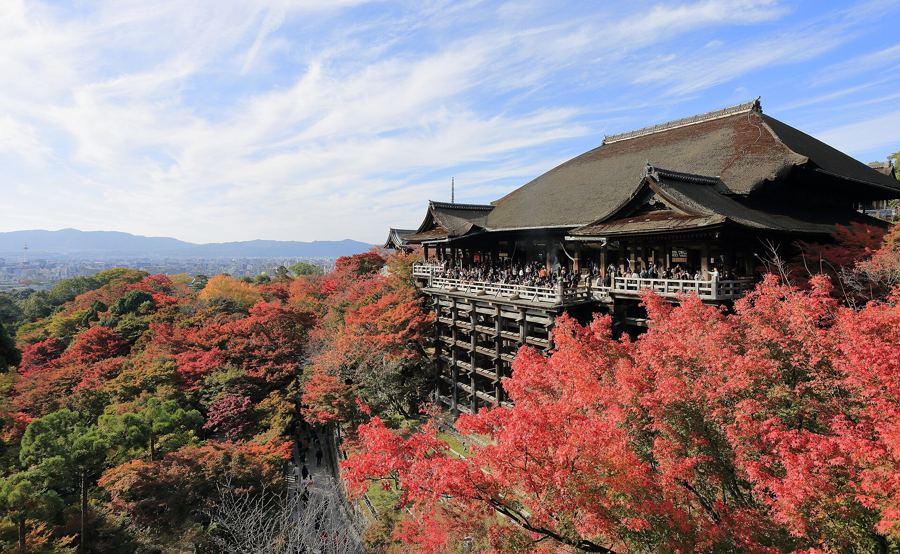 Change here for the Kyoto lineHigashiyama, from Kiyomizu down to Yasaka
Walk on · Back down to the canal and continue south, 5 minutes.
Philosopher's Path, southern stretch
Look down into the canal for carp, and at the stones lining its banks.
The southern half of the path is quieter, with more houses and gardens along the canal, and more small temples and shrines up the slope. One of them, a short climb up a side lane, is the Ōtoyo Shrine, known for the pair of stone mice that guard it instead of the usual lion-dogs.
The path is a lived-in place: residents walk dogs, children go to school along it, and gardens reach to the water's edge. Keep to the path, do not climb onto walls or into gardens, and give way where it narrows.
Notice the water: clear, shallow and gently moving, often with carp and the occasional heron. It comes from the hills to the south, and later in this walk you will see how it gets here.
Walk on · At the canal's southern end, continue south down the lane to Eikan-dō's gate, 6 minutes.
Eikan-dō
Look at the tall gate and the maples that crowd the slope behind it.
Eikan-dō, formally Zenrin-ji, is a temple of the Pure Land school, famous for its autumn colour: its slopes are covered with maples that turn red in November. It takes its popular name from Eikan, a monk who lived here in the eleventh century.
Its best-known treasure is a statue of Amida Buddha looking back over his left shoulder. The story goes that in 1082, while Eikan was walking round the altar chanting, the Amida stepped down and walked ahead of him. When Eikan stopped in surprise, the Buddha turned and said: Eikan, you are slow. The statue keeps that pose.
Inside, covered corridors climb the hillside to a small pagoda with a view over the city. In the autumn leaf season the temple is very busy and has its own entry arrangements.
Walk on · South along the road a few minutes to the precinct of Nanzen-ji and its great gate, 6 minutes.
Nanzen-ji Sanmon
Look up at the massive two-storey wooden gate and its deep, dark roof.
Nanzen-ji is one of the most important Zen temples in Japan, the head temple of its own branch of the Rinzai school. It was founded in 1291 when the retired Emperor Kameyama gave his villa here to be a temple.
The Sanmon, its huge main gate, was rebuilt in 1628 by the warlord Tōdō Takatora, in memory of soldiers who died in the Siege of Osaka. Its upper balcony can be climbed when it is open, giving a view over the precinct and the city. The gate also features in a famous kabuki play, in which the bandit Ishikawa Goemon stands on its balcony admiring the view.
Notice the size of the timbers and how the gate frames the tall pines beyond. The precinct itself is open ground; the buildings and gardens have their own entry rules.
Walk on · East past the lecture hall, then right towards the brick arches, 4 minutes.
Suirokaku aqueduct
Look along the line of red-brown brick arches running through the temple grounds.
The Suirokaku is a brick aqueduct built in the late 1880s as part of the Lake Biwa Canal. It carries a channel of water across the Nanzen-ji precinct on a row of arches, in a style borrowed from Western engineering. Today it is one of the best-loved sights in the temple grounds.
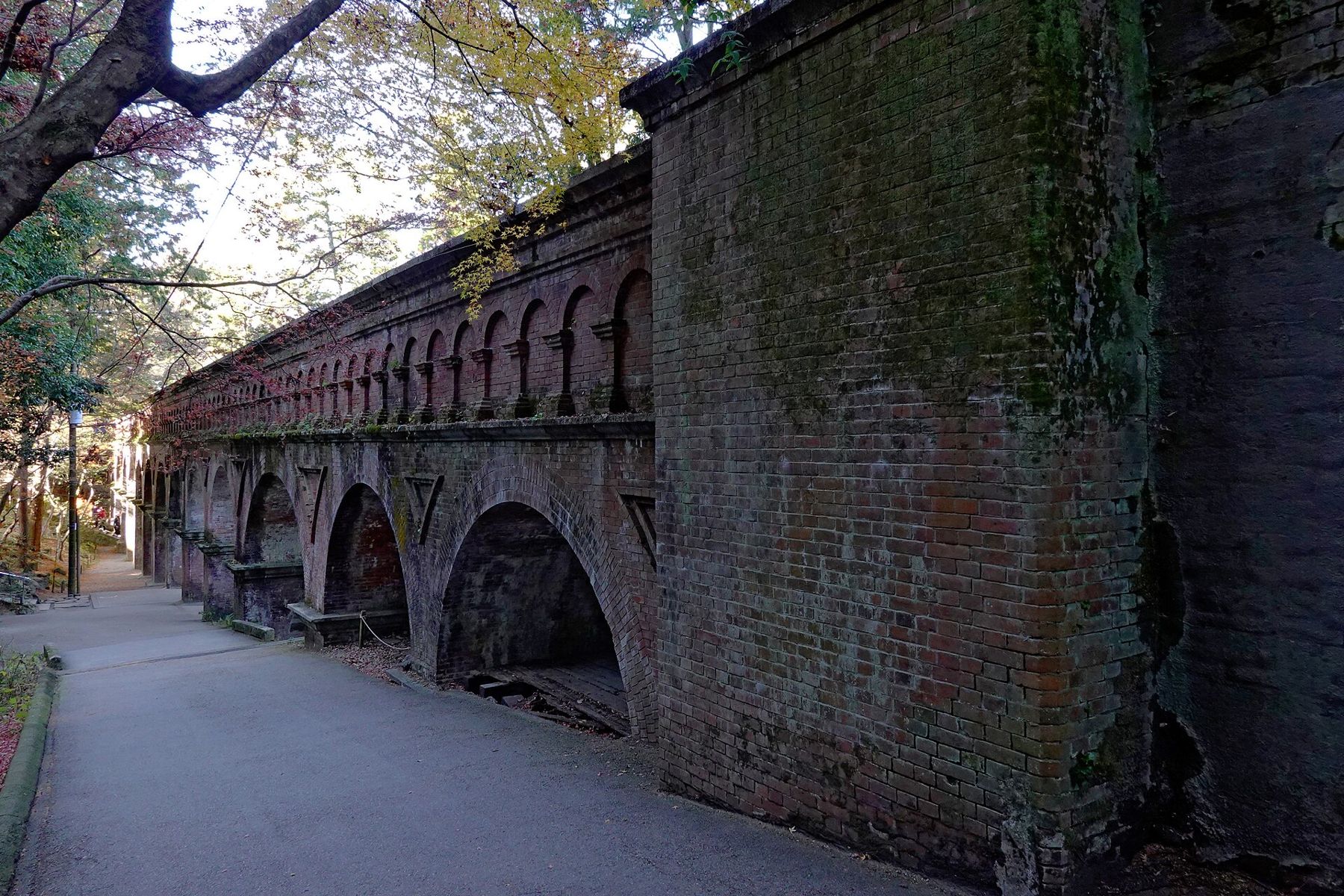
The aqueduct still works. The water flowing along its top is the same water you followed along the Philosopher's Path. Climb the path beside it, up the hill, to see the narrow channel itself, running fast between stone edges under the trees.
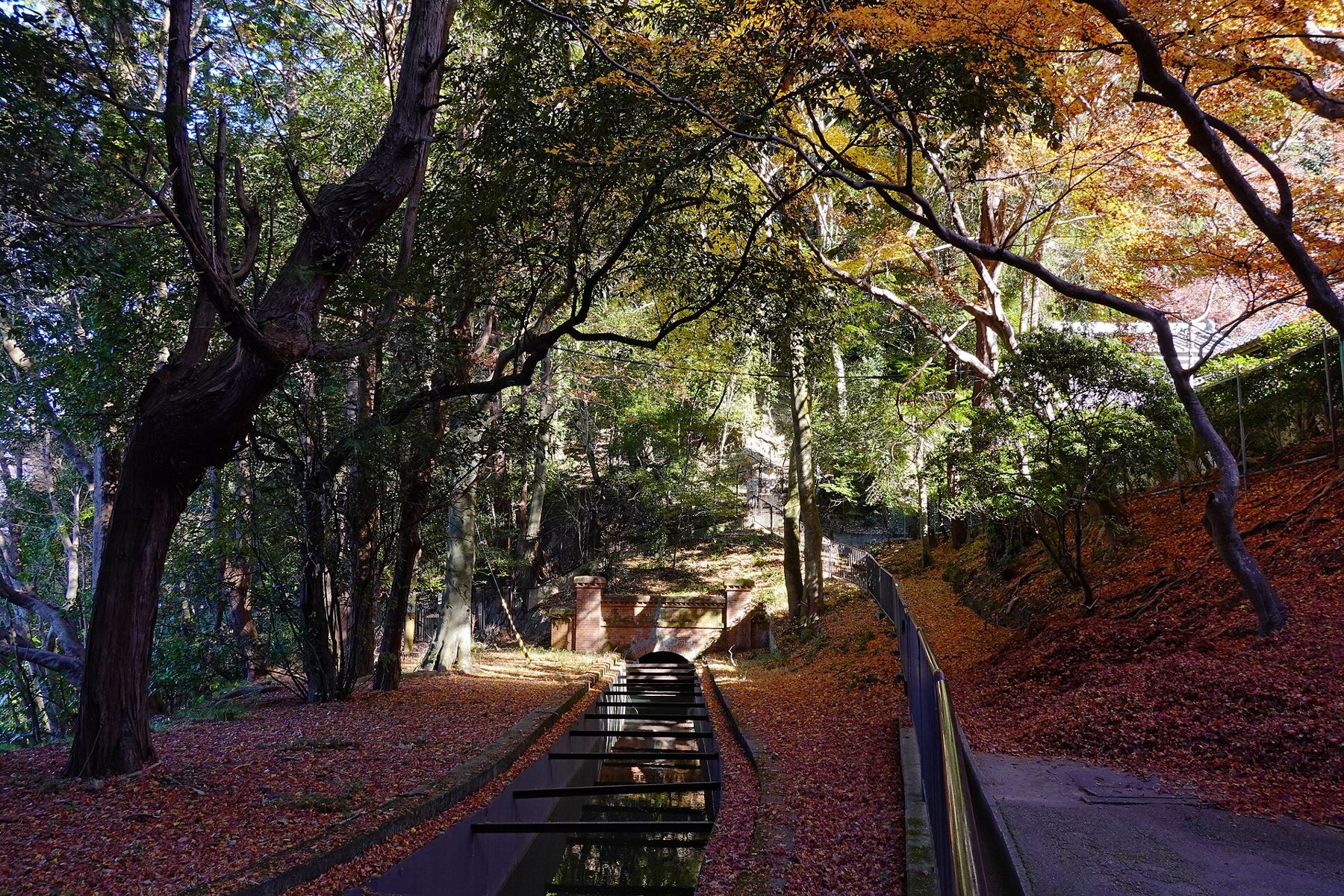
Notice the brickwork of the arches up close, and how well the structure has aged, with moss and fern taking hold in the joints. Stand under an arch and look along the row.
Finishing at Nanzen-ji
The walk ends in the Nanzen-ji precinct. Keage station on the Tōzai subway line is about ten minutes' walk south-west, past the Keage incline, where boats were once hauled up and down a slope on rails. Buses run along the road west of the temple. Public toilets are available in Nanzen-ji's grounds, at Ginkaku-ji and in places along the path. Vending machines selling drinks are easy to find.
Shade, crowds and footing
The path is shaded by trees for much of its length, but stretches are open in the midday sun. The ground is mostly level gravel and paving, with steps inside the temples, especially at Ginkaku-ji's hillside route and Eikan-dō. There is no railing along most of the canal, so watch children. In the cherry and maple seasons the path is crowded from mid-morning; at other times it is quiet.
What to walk next
From Nanzen-ji, the lanes south lead towards Maruyama Park and Yasaka Shrine, the end of the Higashiyama walk from Kiyomizu-dera. For another walk with water and hills, head west by train for Arashiyama and its bamboo grove.